
The Invisible Invasion: Why They Choose Your Home
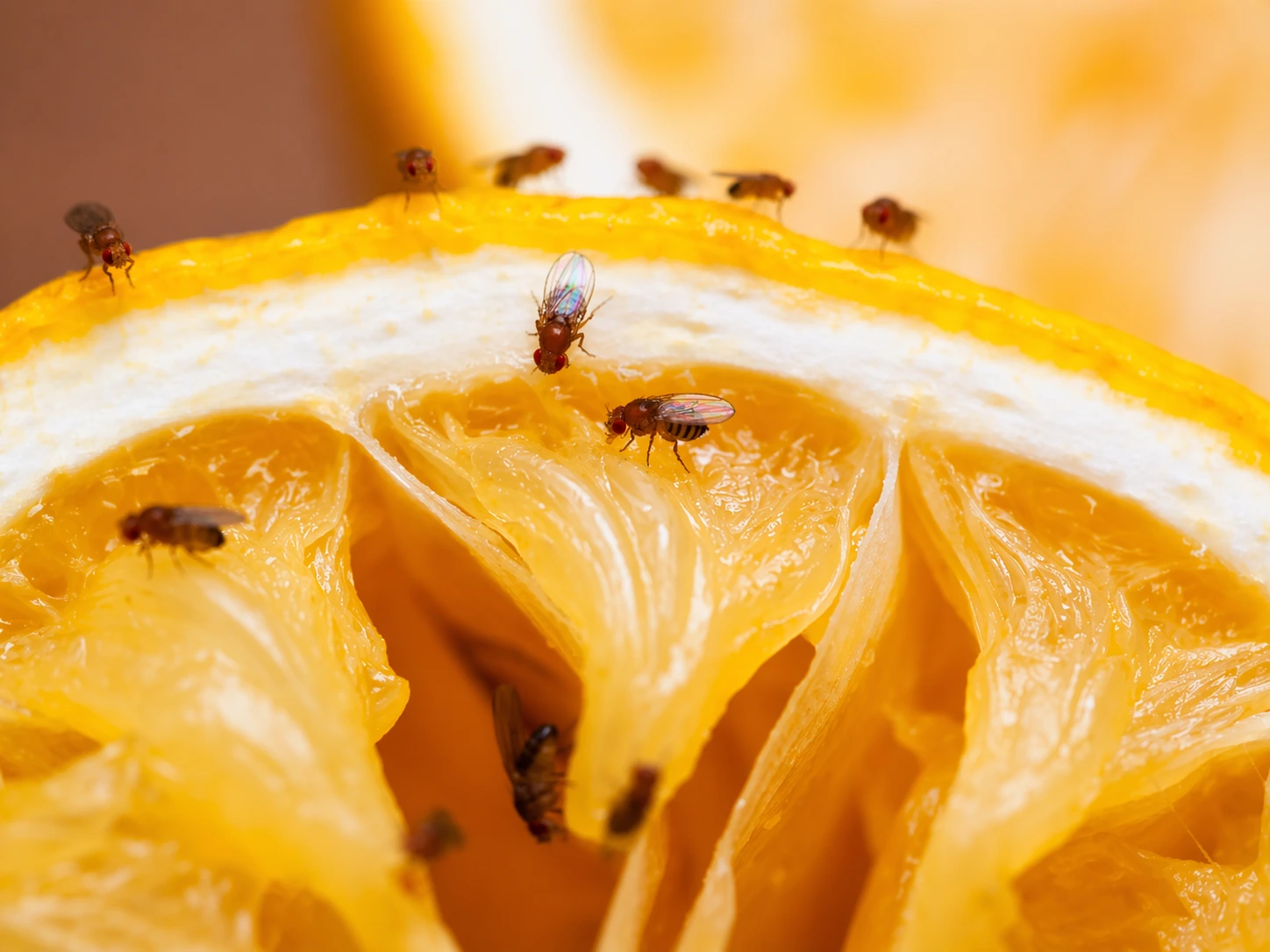
You walk into your kitchen, and suddenly, a cloud of tiny brown specks explodes from your fruit bowl. It feels like they appeared out of thin air, but the truth is much more calculated. Fruit flies (Drosophila melanogaster) possess a sense of smell so sophisticated that they can detect the fermentation of a single overripe banana from over a mile away. Once they catch that scent, they don’t just visit—they move in.
Most people assume fruit flies simply “hatch” from the fruit itself. While it’s true that you often bring eggs home from the grocery store on the skins of bananas or tomatoes, that’s only half the story. These pests are small enough to fly through standard window screens and are constantly scouting for the perfect nursery. A single female can lay up to 500 eggs at once, and in a warm kitchen, those eggs can become breeding adults in just seven days.
If you’re seeing one or two flies today, you likely have hundreds of larvae waiting to emerge tomorrow. They aren’t just looking for a snack; they are looking for a damp, sugary environment to build a dynasty. To stop them, you have to understand that your kitchen isn’t just a room to them—it’s a giant, all-you-can-eat buffet and a maternity ward combined into one.
So let’s break down where to find them, what to do, and how to prevent them from coming again in the next few pages…
The “Drain Trap” Myth and the Real Culprits
Do you have a clean fruit bowl but still see flies hovering near the sink? This is the most common mistake homeowners make. While we call them “fruit” flies, they are actually “vinegar” flies, attracted to anything fermenting or rotting. This means your kitchen drain is often their favorite VIP lounge. Over time, drains accumulate a “biofilm”—a slimy layer of organic waste and bacteria—that serves as a perfect, moist breeding ground.
But the drain isn’t the only hiding spot. Think about your kitchen sponge, your damp mop, or that “empty” beer bottle in the recycling bin. These are all hotspots. Even a tiny spill of juice under the refrigerator or a sticky residue at the bottom of your trash can is enough to support a full-blown infestation. If there is a “sour” smell you can’t quite place, the flies have already found it.
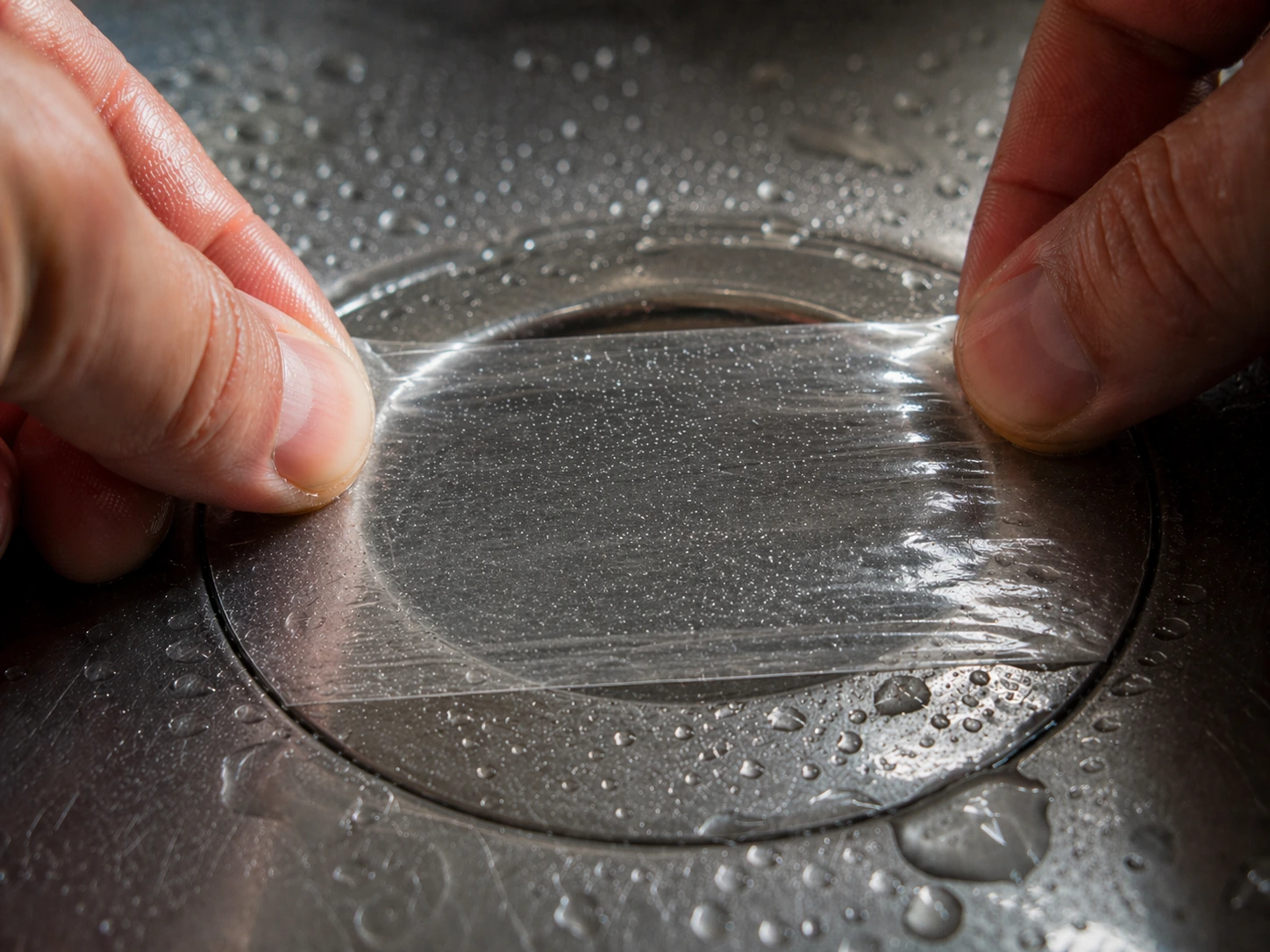
To find the source, try the “Tape Test.” Before bed, place a piece of clear tape over your sink drain, sticky side down. If you wake up to flies stuck to the tape, you’ve found their headquarters. Knowing where they are hiding is the only way to ensure your cleaning efforts aren’t being wasted on the wrong area.
The Liquid Death: Crafting the Perfect DIY Trap
Once you’ve identified the source, it’s time for the offensive. You don’t need expensive chemicals to win this war; you just need to exploit their biology. Because fruit flies are obsessed with the scent of fermentation, Apple Cider Vinegar (ACV) is your greatest weapon. It mimics the smell of overripening fruit better than almost anything else in your pantry.
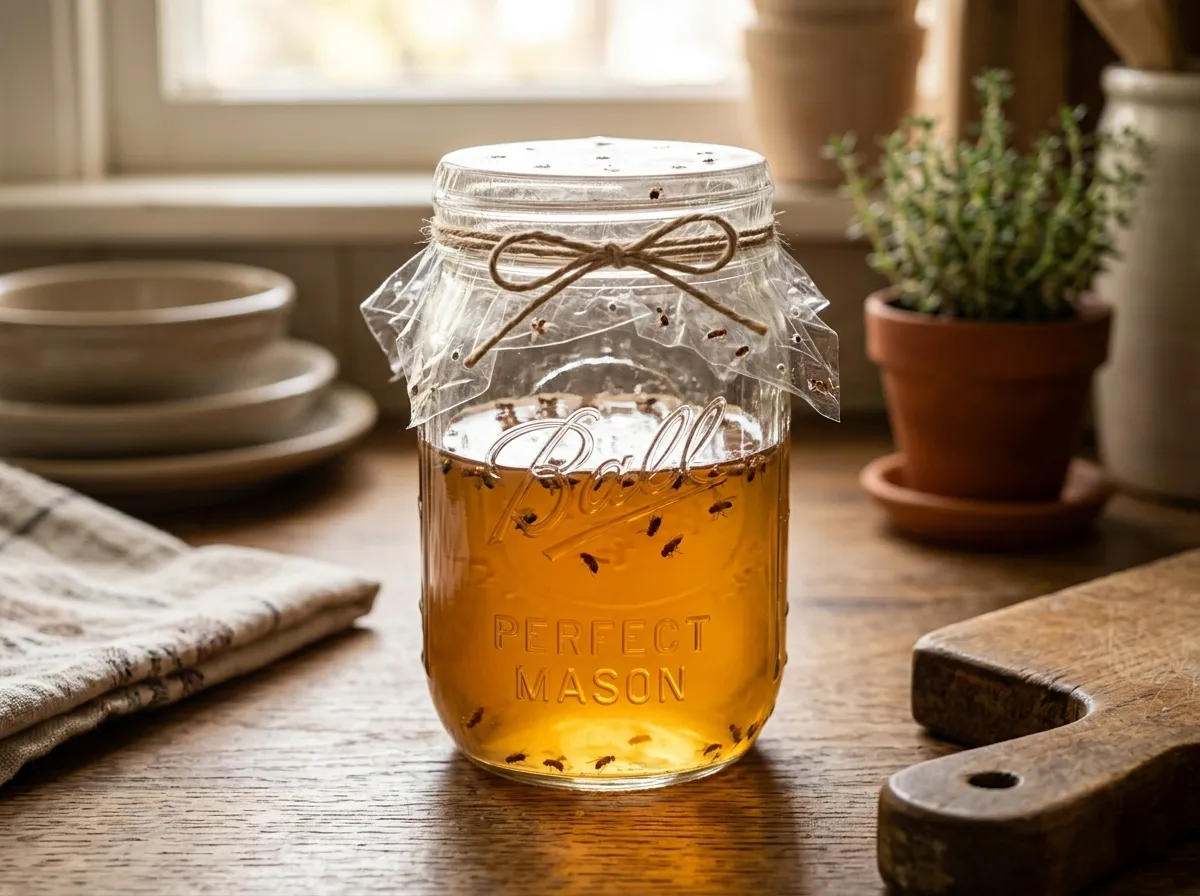
However, a bowl of vinegar alone won’t do much—flies are light enough to land on the surface and fly away. The secret ingredient is dish soap. Adding just two drops of liquid soap breaks the surface tension of the vinegar. When flies attempt to land for a drink, they immediately sink and drown. To make it “escape-proof,” use a jar covered in plastic wrap with tiny holes poked in the top. They can find their way in, but they can’t find their way out.
For a more “targeted” trap, try the Wine Method. If you have a bottle with a tiny bit of red wine left at the bottom, leave it on the counter with a paper funnel inserted into the neck. The narrow opening of the funnel acts as a one-way door. These DIY solutions are often more effective than store-bought sticky traps because they use active bait rather than just passive luck.
Lockdown Protocol: How to Make Your Kitchen a Fortress
Killing the adults is only a temporary fix. If you don’t change the environment, the next generation will hatch within days. Prevention is about “moisture management.” Start by washing all produce the moment you bring it home to rinse off any hitchhiking eggs. Dry the fruit thoroughly before storing it—or better yet, keep everything in the refrigerator during the summer months.
Next, address the “hidden” dampness. Squeeze out your sponges and hang them to dry, or toss them in the dishwasher daily. Take out your recycling and compost every single night. If you’ve confirmed flies are in your drain, don’t use bleach—it’s too thin to kill the larvae in the biofilm. Instead, use boiling water or a thick, foaming drain cleaner designed to eat away organic matter.
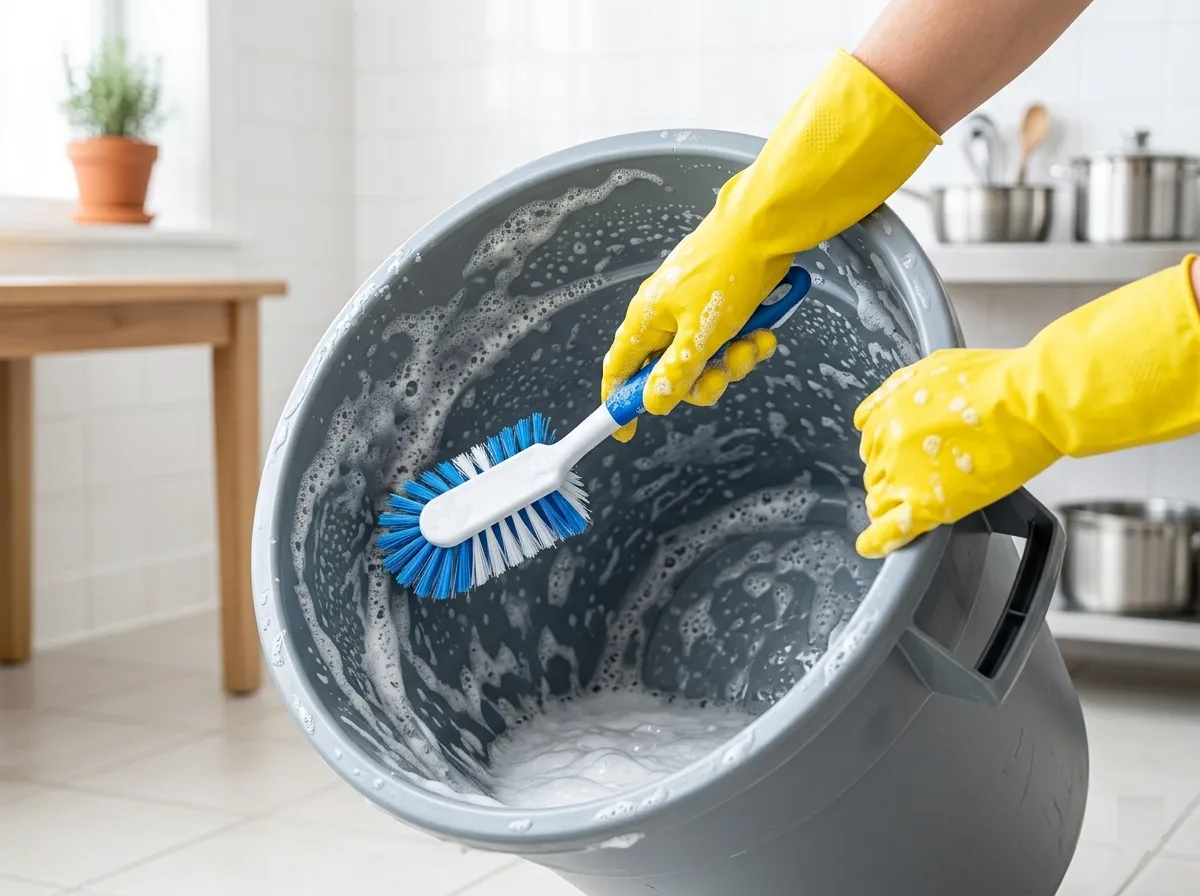
Finally, check your trash cans. We often change the bag but forget the “juice” that leaks into the bottom of the bin. A quick scrub with a disinfectant will remove the pheromones that attract new flies from outside. By removing the food, the moisture, and the breeding sites, you turn your kitchen from a fly paradise into a hostile environment they can’t survive in.