
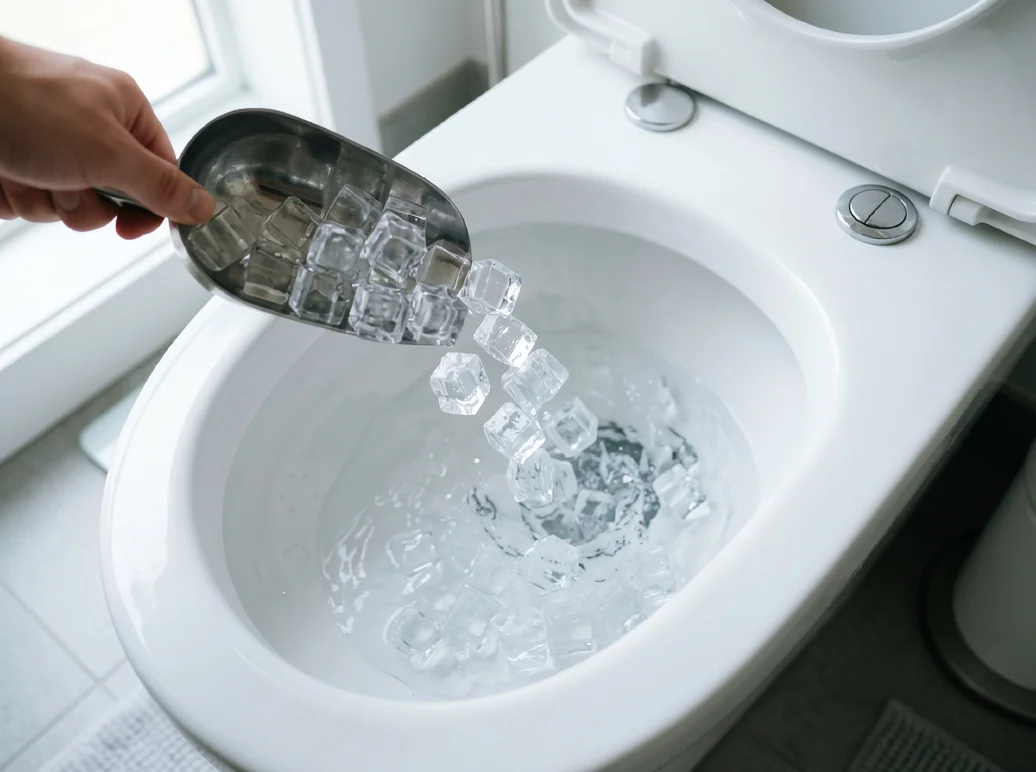
You’ve likely heard every home maintenance “hack” in the book, from using vinegar to unclog drains to putting a tennis ball in the dryer. Most of these suggestions range from mildly helpful to completely ineffective. However, there is a chillingly effective trick gaining momentum among homeowners and professional plumbers alike that involves a common staple in your freezer: ice cubes. While it might seem counterintuitive, or even a cold-hearted prank, dumping a bucket of ice into your toilet bowl is actually a strategic move for household hygiene.
The bathroom is often the most difficult room to keep truly “fresh.” Despite regular scrubbing and the use of expensive chemical deodorizers, lingering issues with drainage and odor can persist. This ice cube method isn’t about cooling down your porcelain; it’s a mechanical and thermal solution to some of the most frustrating aspects of bathroom upkeep. Before you dismiss it as another internet fad, it’s important to understand the physics of how ice interacts with your plumbing system in ways that liquid water simply cannot.
Keep reading to find out more…
The Power of Scouring and Agitation
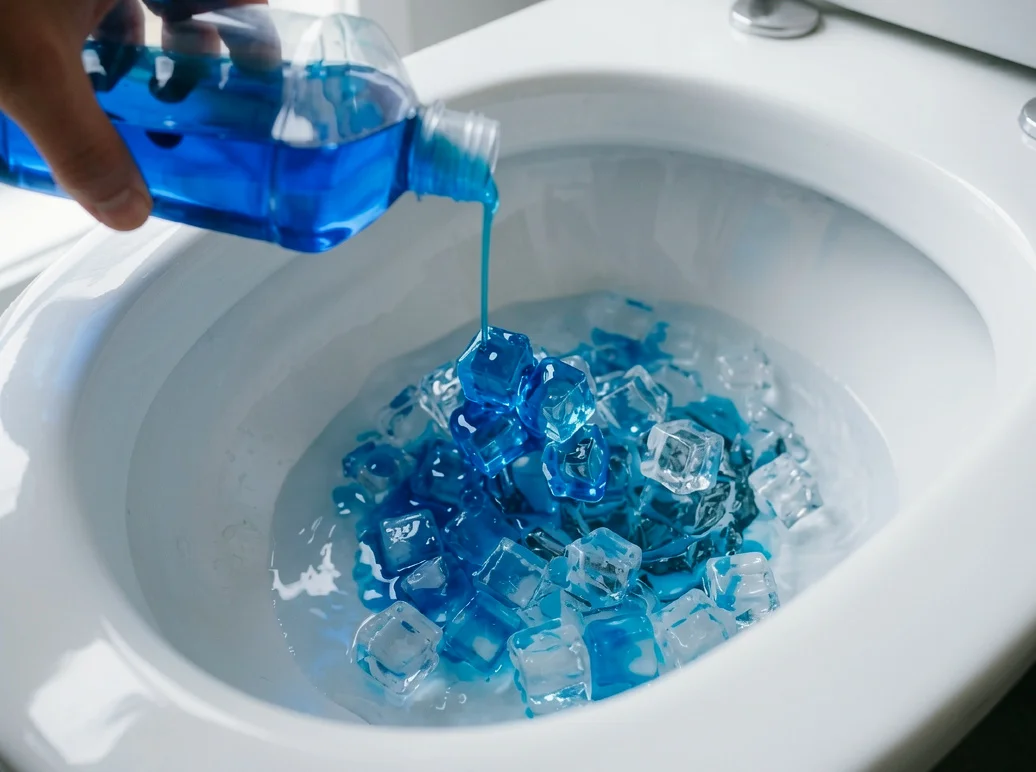
The primary reason this trick works involves mechanical agitation. Unlike standard liquid water, which flows smoothly around obstructions, ice cubes act as a solid abrasive. The presence of the ice creates a physical barrier that prevents your liquid toilet cleaner from simply rushing down the drain, allowing the chemicals to sit and work on the porcelain for a much longer duration. When you flush a significant amount of ice, the cubes tumble through the “trap”—the S-shaped curve of the pipe—and scrape against the interior walls. This movement helps dislodge “soft” clogs, such as accumulated toilet paper or organic buildup, that haven’t quite caused a full stoppage yet but are slowing down the flush.
Think of it as a gentle, frozen “exfoliation” for your pipes. As the ice moves through the system, it exerts pressure and creates turbulence that liquid water lacks. Because the ice is solid, it forces the water level to rise and move with more velocity, pushing debris further down the line. The best part? There is zero risk of damaging your pipes. Since the ice begins to melt immediately, it will never create a permanent blockage, making it a much safer alternative to harsh chemical cleaners or metal snakes that can scratch porcelain and PVC.
Odor Neutralization and Sensor Recalibration
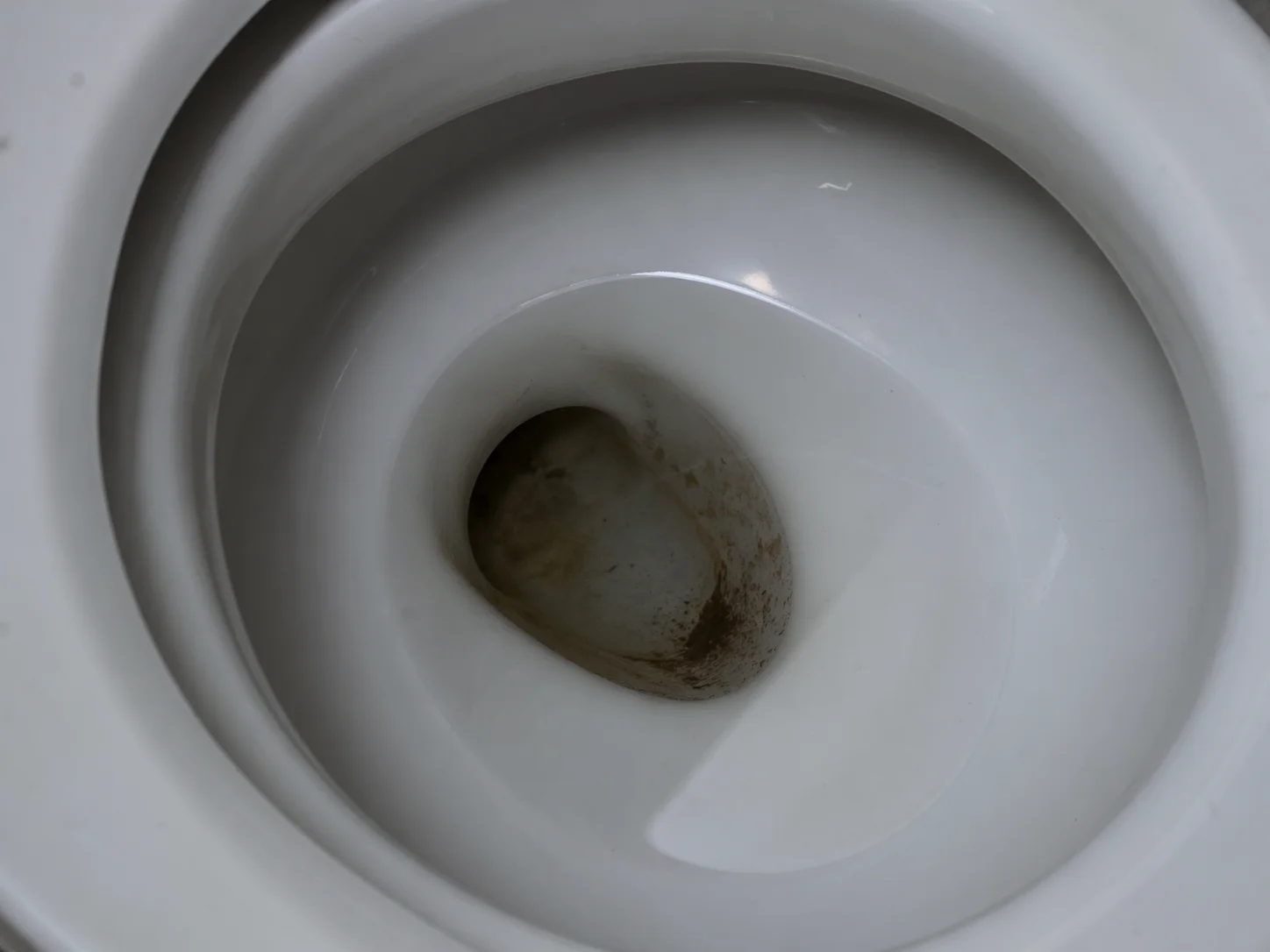
Beyond clearing debris, ice cubes are remarkably effective at neutralizing stubborn odors. Many bathroom smells originate from the “biofilm” or sludge that accumulates just out of reach of your toilet brush. When you dump ice into the bowl and add a small amount of dish soap or cleaning solution, the ice carries these cleaning agents more effectively against the sides of the pipe. The cold temperature also helps to temporarily suppress the volatility of odor-causing molecules, giving your cleaning agents a head start on breaking down the source of the scent.
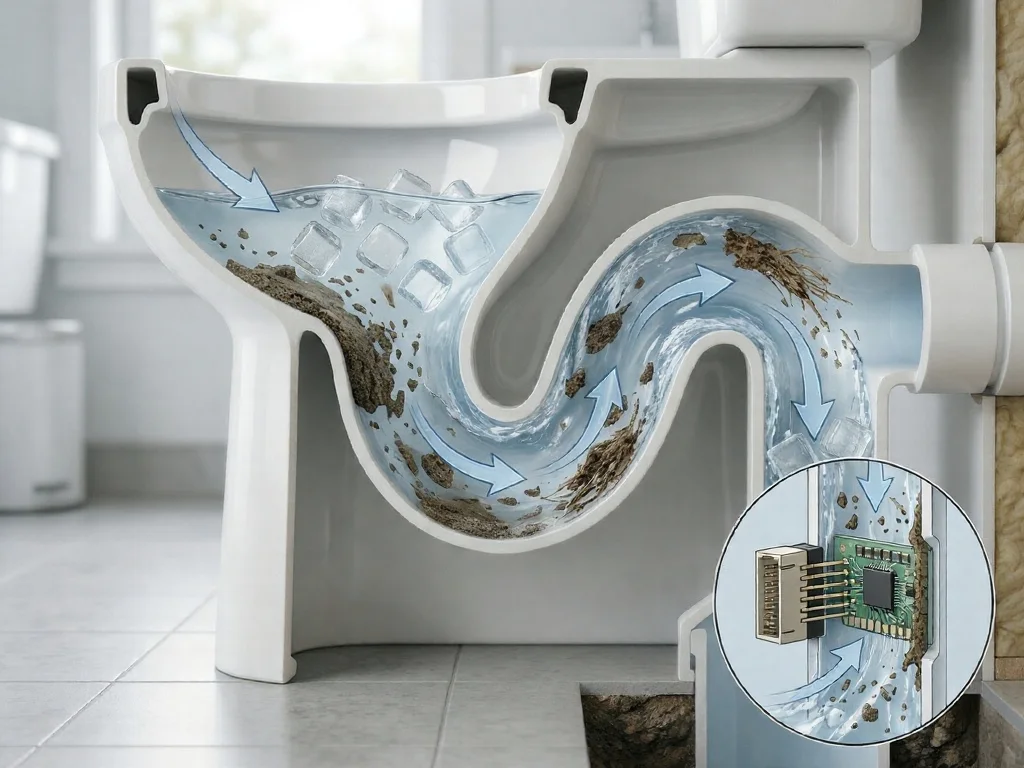
For those with high-tech or “smart” toilets, this method serves an additional technical purpose. Modern toilets often rely on sensors to determine the water level and flush strength. Over time, mineral deposits or “hard water” scaling can interfere with these sensors. The sudden change in temperature and the physical presence of the ice cubes can help “reset” the mechanical floats or sensors by clearing away the film that causes them to stick. It’s a low-cost maintenance step that ensures your toilet’s internal components remain responsive and accurate.
Checking the Health of Your Main Line
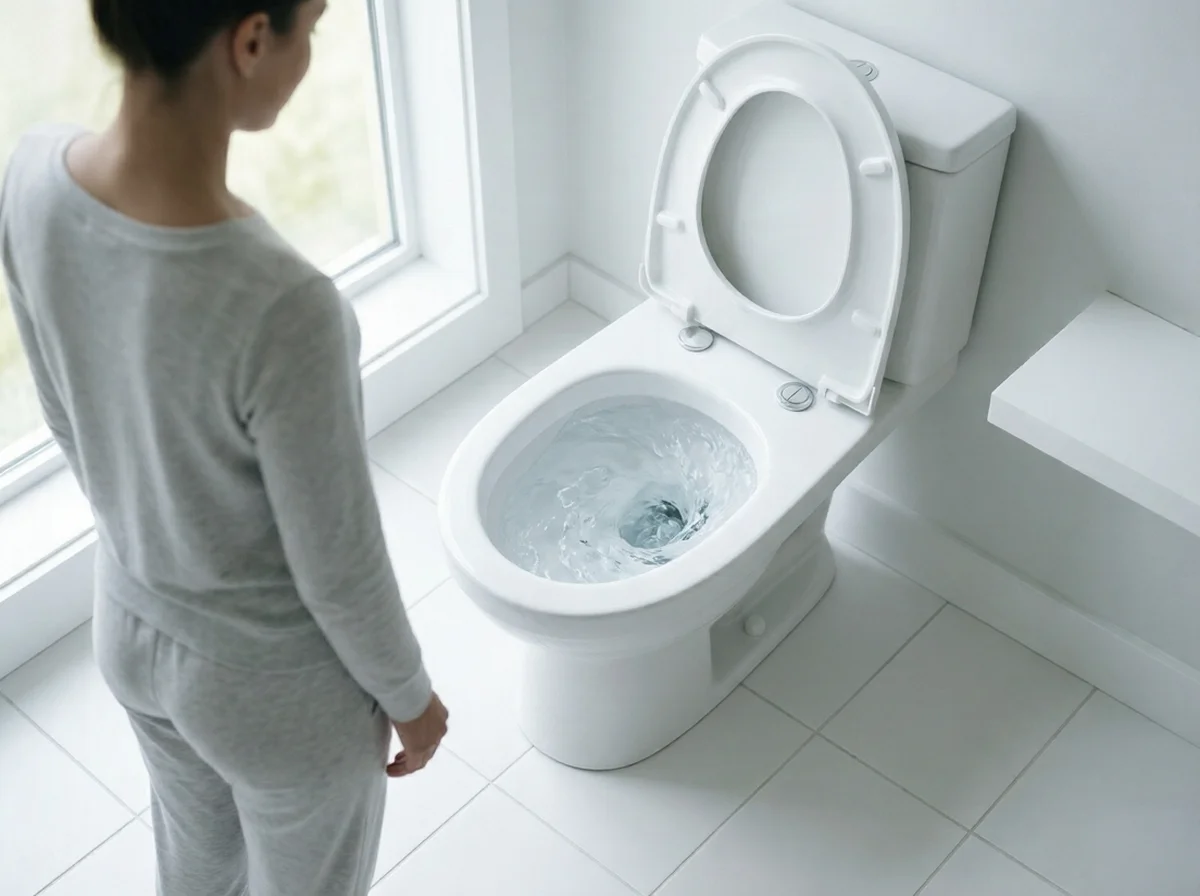
The final reason to utilize the ice cube method is for diagnostic testing. If you suspect your home has a slow main sewer line, the “Ice Test” is a professional-grade trick you can perform yourself. By flushing a large volume of ice, you are creating a “slug” of solid material that requires a clear path to exit the home. If the toilet flushes the ice with a vigorous roar, your line is clear. However, if the ice lingers or the water backs up significantly before draining, you have an early warning sign of a deep-seated blockage or root intrusion.
This proactive approach allows you to catch plumbing disasters before they result in a literal overflow. Using ice is a “stress test” that mimics a heavy-use scenario without the risk of flooding your bathroom with wastewater. By performing this once every few months, you maintain the scouring power of your pipes while staying informed about the state of your home’s hidden infrastructure. It’s a simple, free, and effective way to ensure your plumbing stays as chill as the ice itself.