
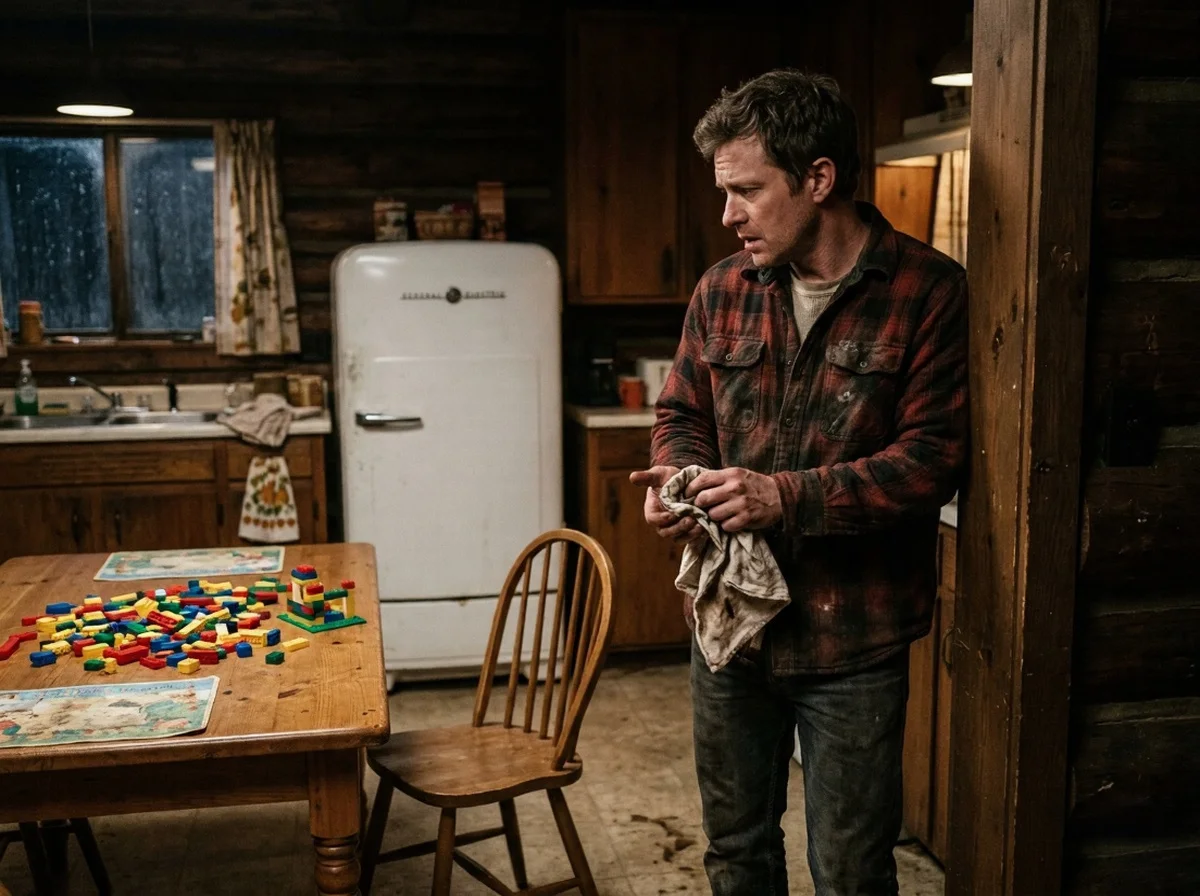
The silence in the house was the first thing Mathew noticed. It wasn’t the peaceful quiet of a mountain village afternoon; it was a heavy, unnatural void. He had been in the shed a little while, sharpening the blades of the snowblower. He had left six-year-old Michael sitting at the kitchen table with a pile of Lego bricks. But when Mathew stepped inside, the only sound was the hum of the refrigerator.
“Mike? Buddy, you done already?” Mathew called out, wiping grease from his hands with a rag. There was no answer. He walked into the living room, expecting to find the boy hiding behind the sofa or glued to a book. The room was empty. A single red Lego brick sat on the rug, looking strangely abandoned. Mathew’s pulse began to quicken, a small spark of unease lighting in his chest.
He checked the upstairs bedrooms, then the basement. Each empty room made his heart beat a little faster. He ran back to the kitchen and noticed what he had missed before. The heavy wooden back door wasn’t latched. A thin drift of snow had already piled up on the floor, a white finger pointing toward the vast, unforgiving woods of the mountain.
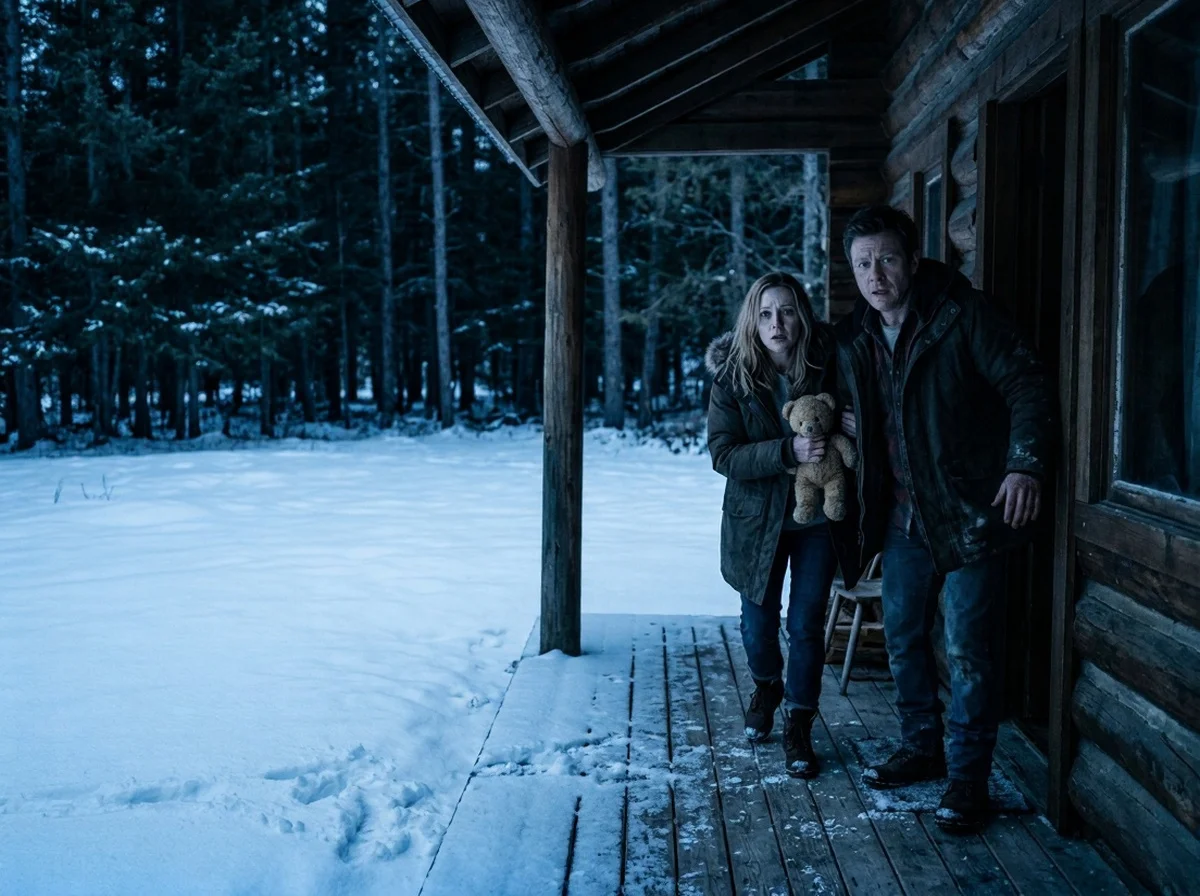
“Angela! Come quick!” Mathew shouted toward the stairs, though he knew his wife was still in her home office with her headphones on. When she appeared at the top of the landing, seeing the look on Mathew’s face, her smile instantly vanished. She didn’t need to ask. The open door and the empty chair told the whole story.
They burst out onto the porch, the freezing mountain air biting at their lungs. The backyard was a sea of white, and leading away from the porch steps was a single, wobbling trail of footprints. Michael—or Mike, as he preferred to be called when he was feeling “brave”—had followed something straight into the mouth of the pine forest.
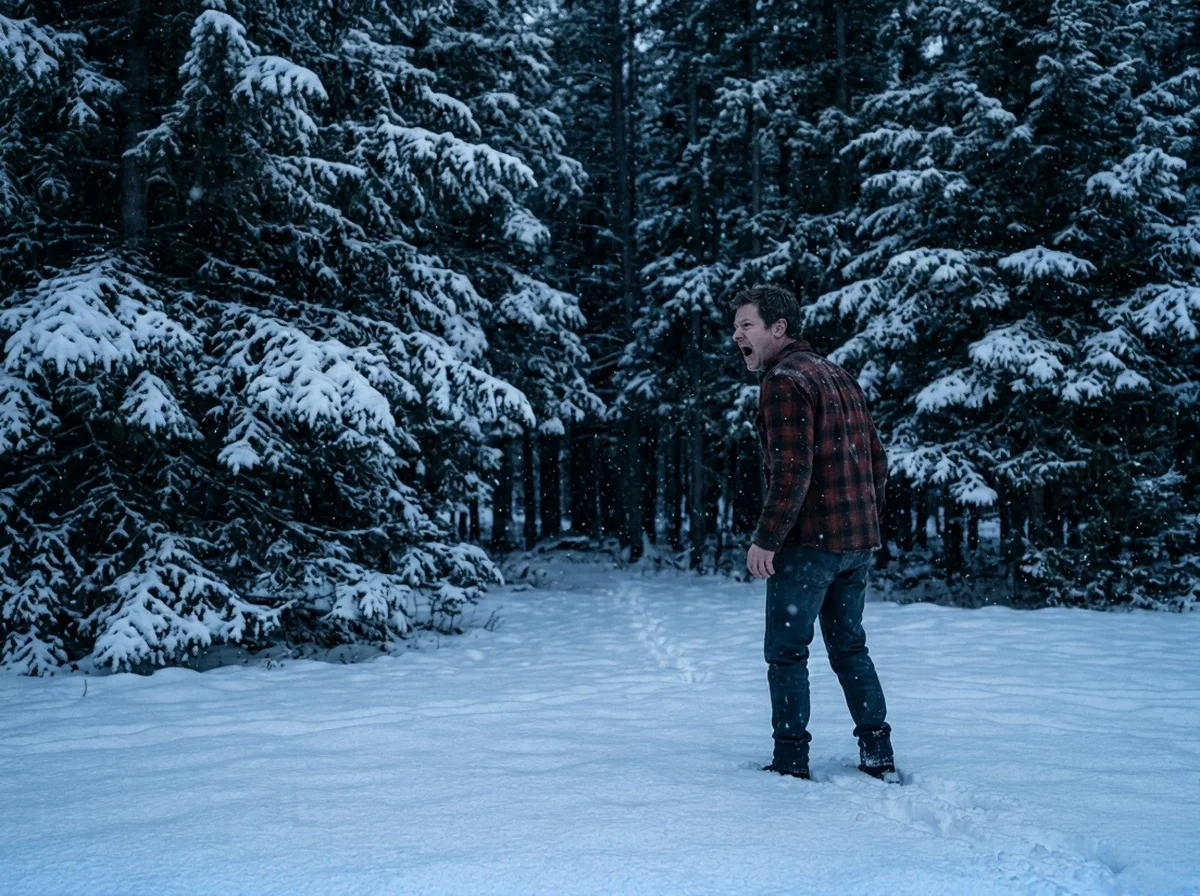
Mathew sprinted to the edge of the woods, screaming his son’s name until his voice cracked. The trees seemed to soak up the sound, offering nothing in return but the rustle of dry branches. The footprints were already starting to fill with fresh, falling flakes. If they didn’t act now, the mountain would erase the only map they had to find their son.
By the time the sun began to dip behind the jagged peaks, the driveway was full of trucks. News travels fast in a small mountain community. Neighbors arrived with heavy coats, high-powered flashlights, and the grim determination of people who knew how quickly a child could be lost to the elements. A formal search committee was formed on the fly in Mathew’s garage.
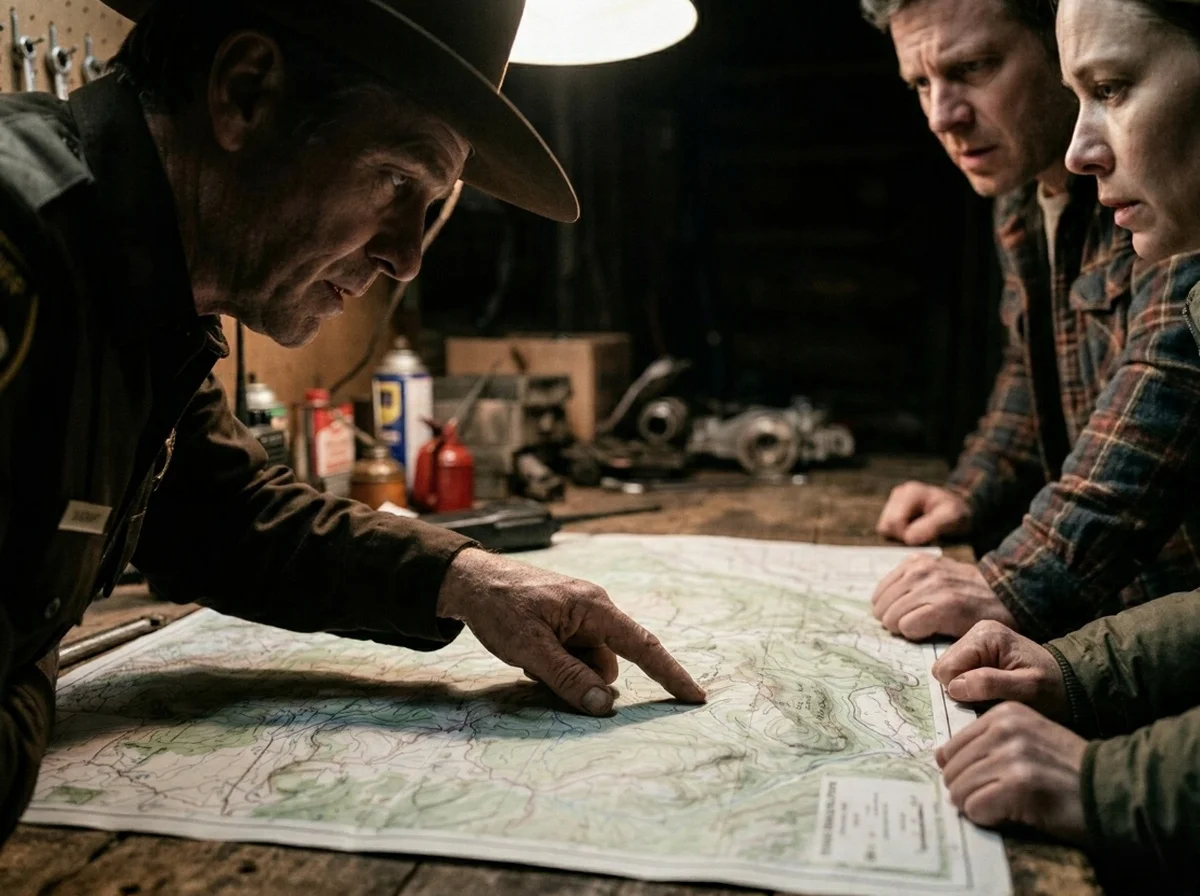
The local Sheriff, a man who had seen too many mountain winters, spread a map out on the workbench. “We have three hours of true darkness before the temperature hits the danger zone,” he warned. Mathew gripped the edge of the table, his knuckles white. Angela sat nearby, her face pale, clutching Mike’s favorite stuffed bear.
The group was divided into teams. Their neighbor, Mr. Henderson, a veteran tracker, led the first group toward the creek. Mathew insisted on leading the second group, pushing toward the higher ridges. He couldn’t sit still; he felt that if he stopped moving, the cold would settle into his own bones just as it was likely settling into Michael’s.
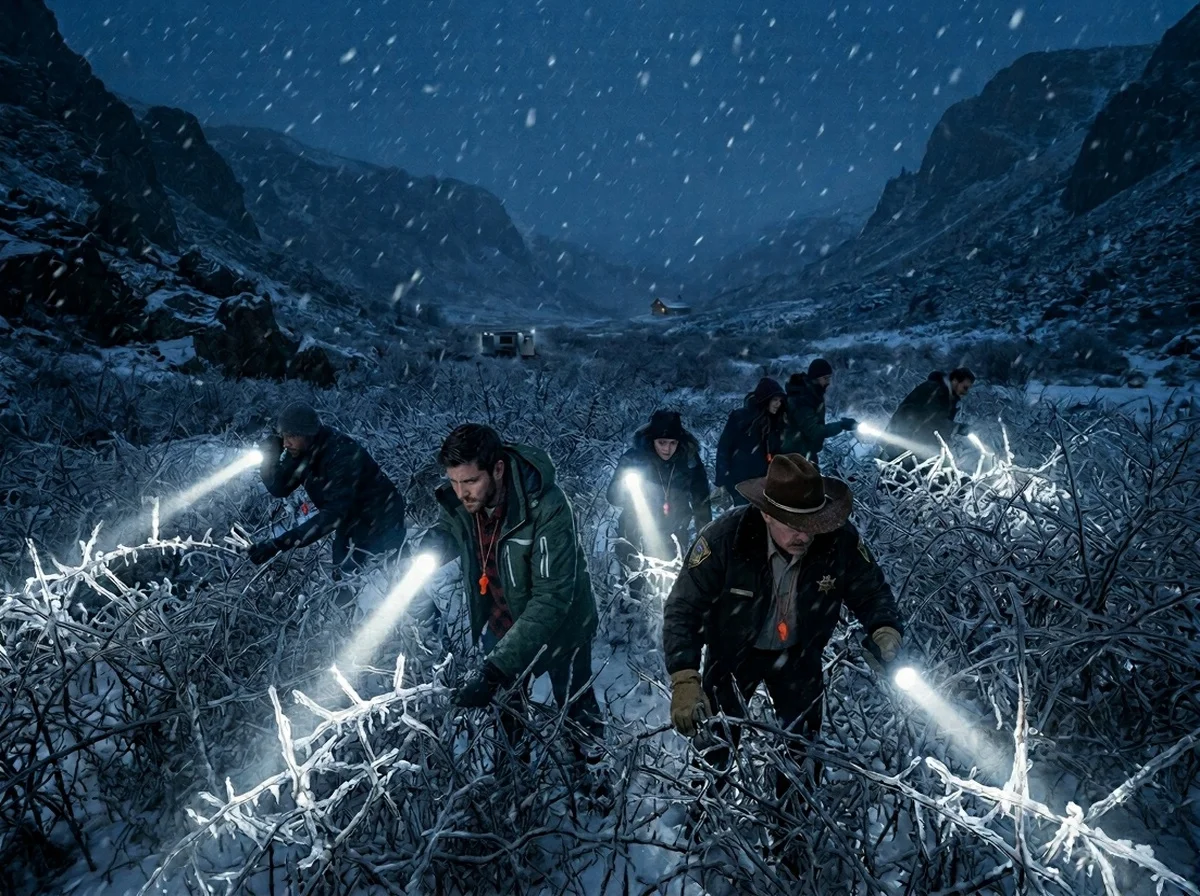
The first two hours of the search were a blur of blinding white light and jagged shadows. Every stump looked like a crouching child; every gust of wind sounded like a distant cry for “Daddy.” Mathew led his team through the “Thicket of Thorns,” a dense patch of brush that Mike usually avoided because it scratched his legs.
“Mike! Michael! Can you hear me?” Mathew roared. The searchers beside him blew whistles, the sharp blasts echoing off the rock faces. They found a small indentation in the snow beneath a fallen log—a place where a child might have sat to rest—but there were no clues left behind. No dropped glove, no scrap of fabric.
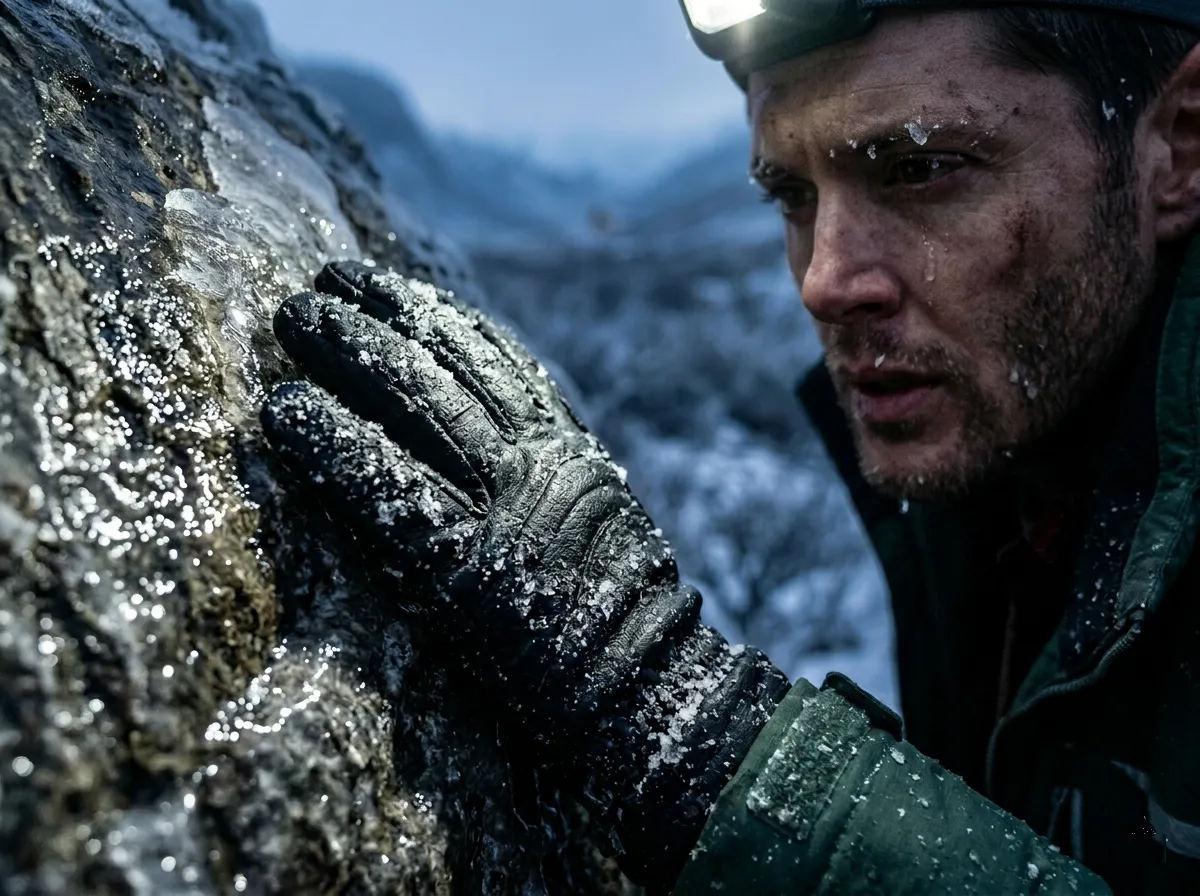
The further they climbed, the more the terrain fought back. The mountain was a maze of hidden ravines and slick ice. Mathew fell twice, skinning his palms on frozen rock, but he didn’t feel the pain. His mind was locked on a single image: Mike in his thin blue fleece jacket, shivering somewhere in the dark, wondering why his father hadn’t come for him yet.
Back at the house, the garage had become a command center. Mathew knew Angela would be pacing the length of the concrete floor, her eyes glued to the radio. Every time it crackled with static, she jumped. The neighbors who weren’t out searching were bringing thermoses of coffee and blankets, their silent presence a fragile wall against her rising panic.
Mathew remembered what Angela had told him before he left. “He’s smart,” Angela whispered over and over. “He knows to stay put if he gets lost. We taught him that.” But he also knew that a six-year-old’s logic often failed when the shadows grew long, and the coyotes began their evening chorus. The mountain didn’t care how smart a child was; it only cared about the cold.
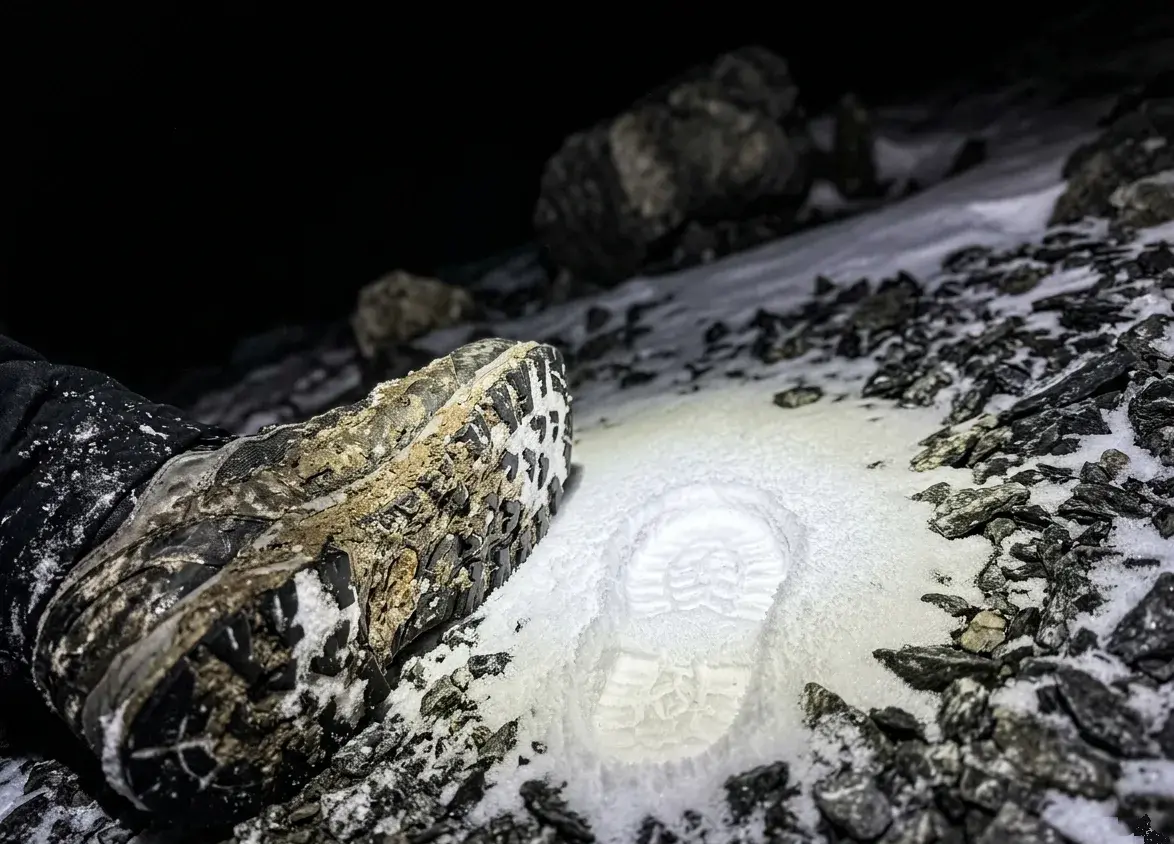
A searcher up front, near the old lumber mill, had found something. Mathew held his breath, his heart hammering against his ribs. “We’ve got a visual on a boot print,” someone said. “Size 12, child’s. Heading north toward the Black Slate Ridge.” Someone quickly relayed the message home. It was the first real lead, but it was heading toward the most dangerous part of the mountain.
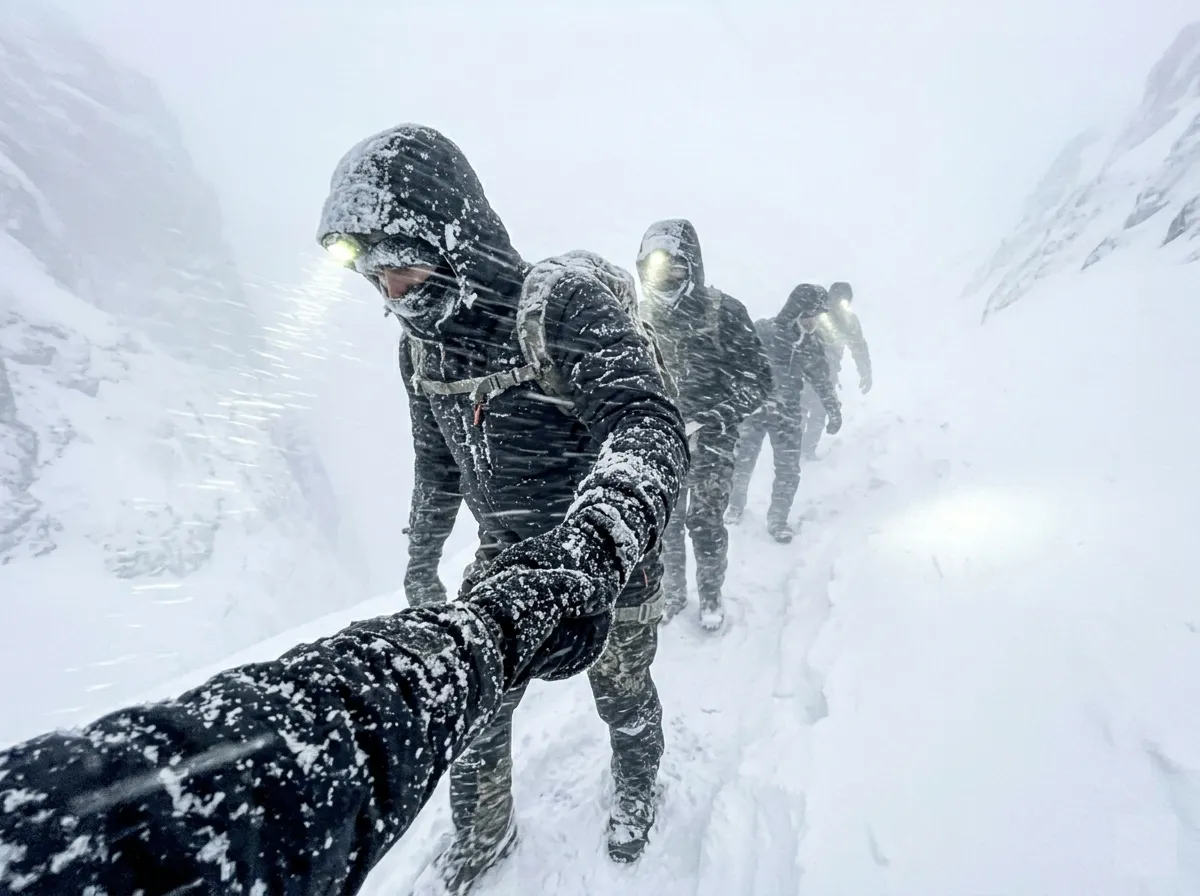
Mathew’s team redirected immediately, cutting across a steep ravine to intercept the path toward Black Slate Ridge. The wind was picking up now, turning the snow into a horizontal curtain that stung their eyes. Visibility was down to less than ten feet. They moved in a tight line, holding onto each other’s belts so as not to get separated in the whiteout.
“We have to turn back, Mathew!” one of the neighbors shouted over the gale. “We can’t see the edges of the cliffs anymore! It’s suicide!” Mathew turned, his face a mask of frost and fury. He wouldn’t turn back. He couldn’t. “My son is out here!” he screamed back. “If I turn back, I’m leaving him to die!”
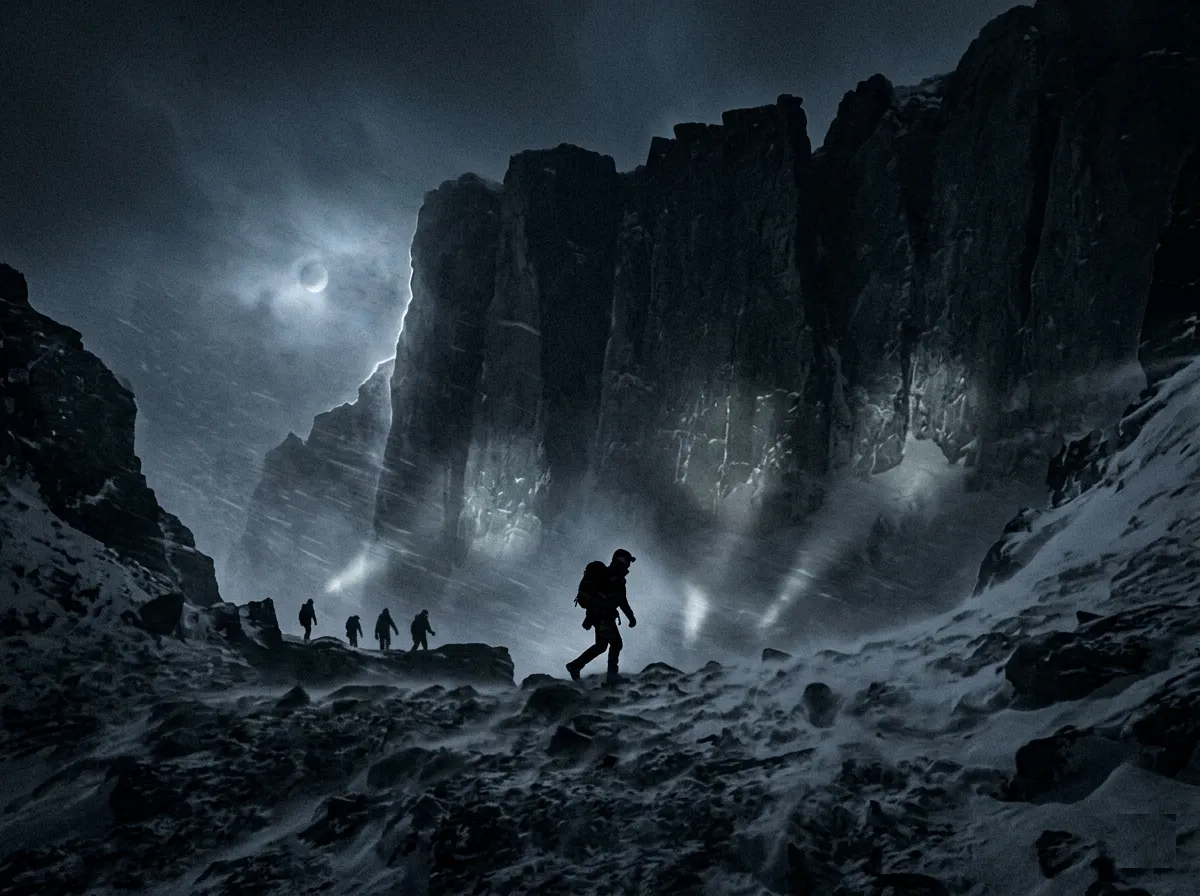
He pushed forward alone for a few yards before the others, moved by his desperation, followed. They reached the base of the ridge, a wall of dark stone that looked like a fortress in the moonlight. The footprints the other team had seen were gone now, buried under the fresh accumulation. They were flying blind, guided only by a father’s frantic intuition.
The search had reached its sixth hour. The committee members were starting to flag, their movements heavy and slow. Even the Sheriff looked worried as he checked his watch. The temperature had dropped well below freezing. In these conditions, a small child’s body wouldn’t be able to maintain heat for much longer.
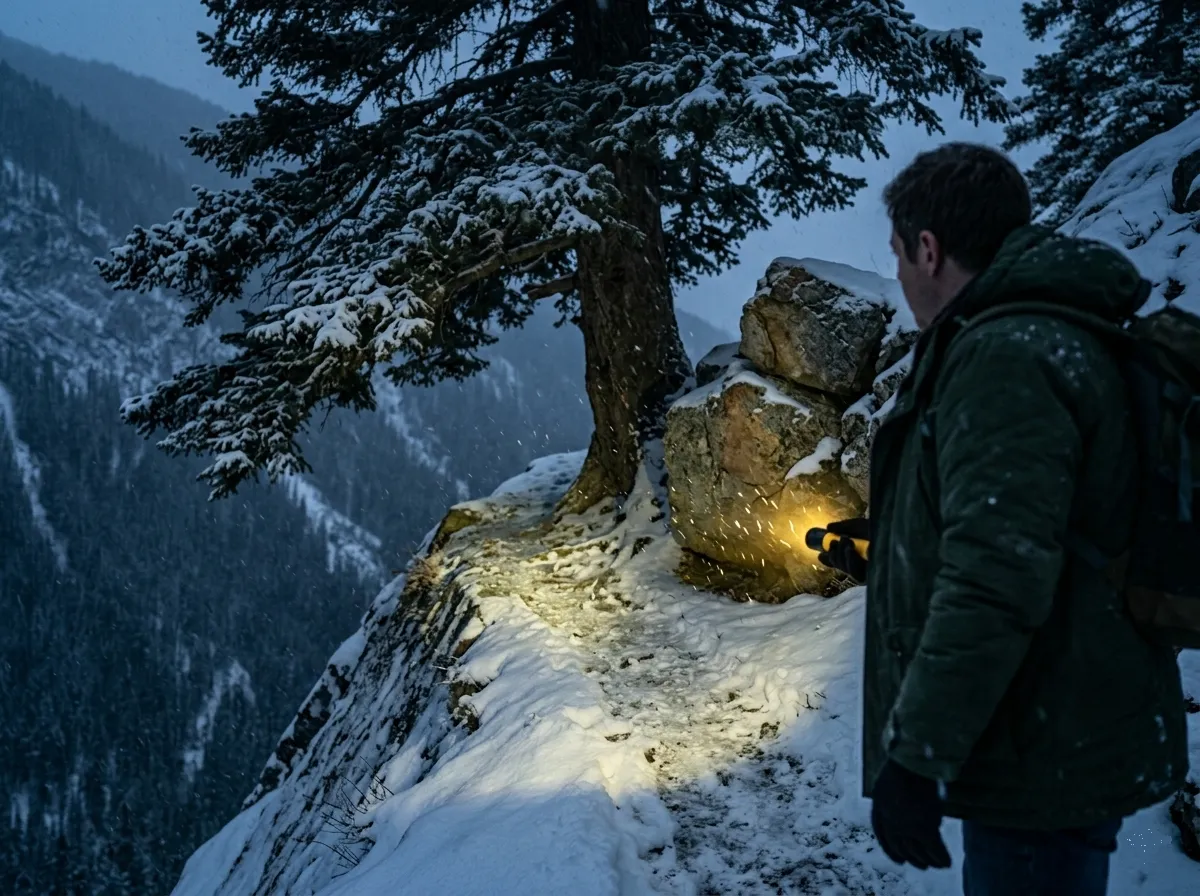
Mathew was climbing a narrow goat path that wound up the side of the ridge. His flashlight was dying, the beam flickering into a dim yellow. He swung it left and right, his hope fading with the light. He began to pray, bargaining with the mountain, promising anything if he could just see his son’s face one more time.
Suddenly, the wind died down for a fleeting second. In that pocket of silence, Mathew heard it. It wasn’t a scream or a cry. It was a faint, rhythmic tapping. Clack. Clack. Clack. It sounded like two rocks being hit together. Mathew froze, holding his breath. Clack. Clack. It was coming from a cluster of boulders just above him.
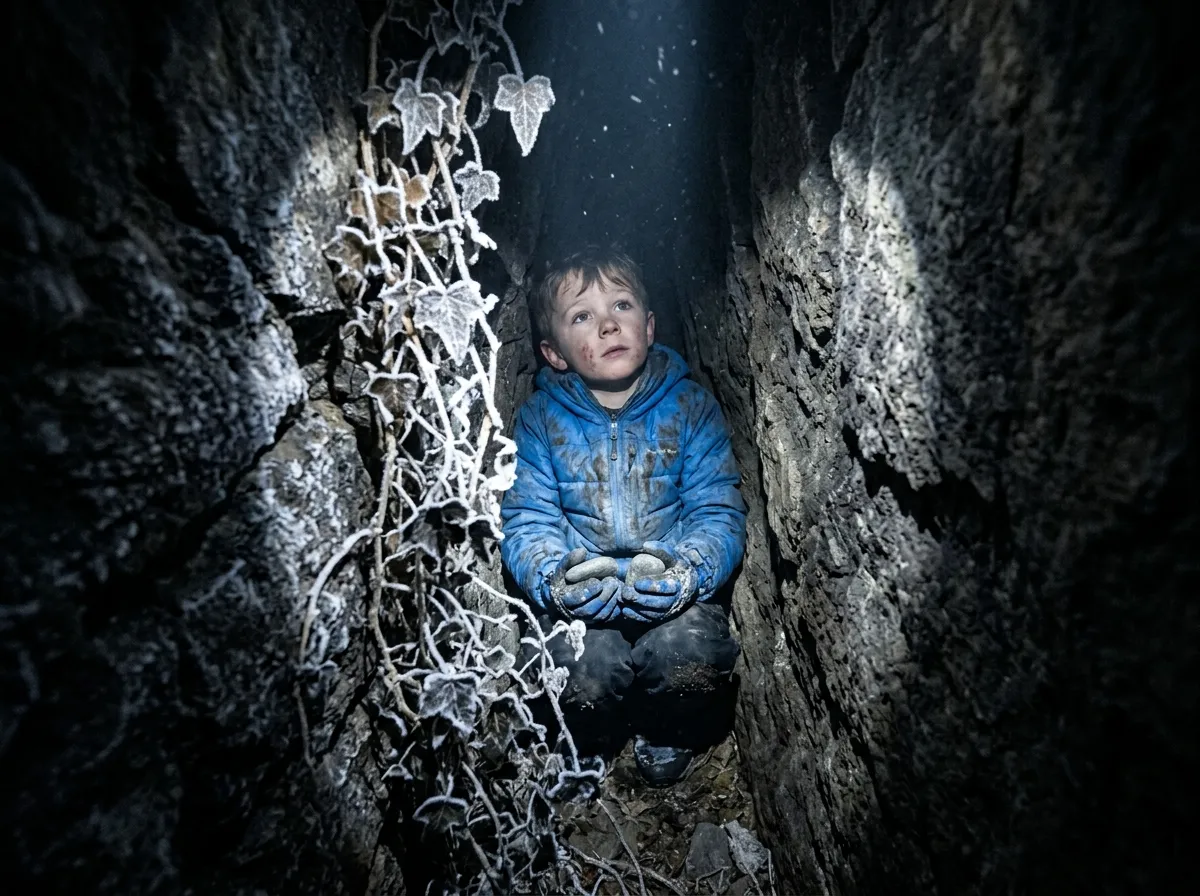
“Michael?” Mathew whispered, his voice trembling. He scrambled up the last few feet of the path, his boots slipping on the treacherous ice. He rounded a large, flat boulder that overhung a small hollow. His flashlight beam swept into the darkness of the crevice, and for a moment, he thought his mind was playing tricks on him.
There sat Michael. He had found a small, dry alcove where the snow hadn’t reached. He was huddled in a ball, but he wasn’t crying. In his hands, he held two gray stones, which he was calmly striking together. He looked up at Mathew, his eyes blinking against the light, his face streaked with dirt but remarkably calm.
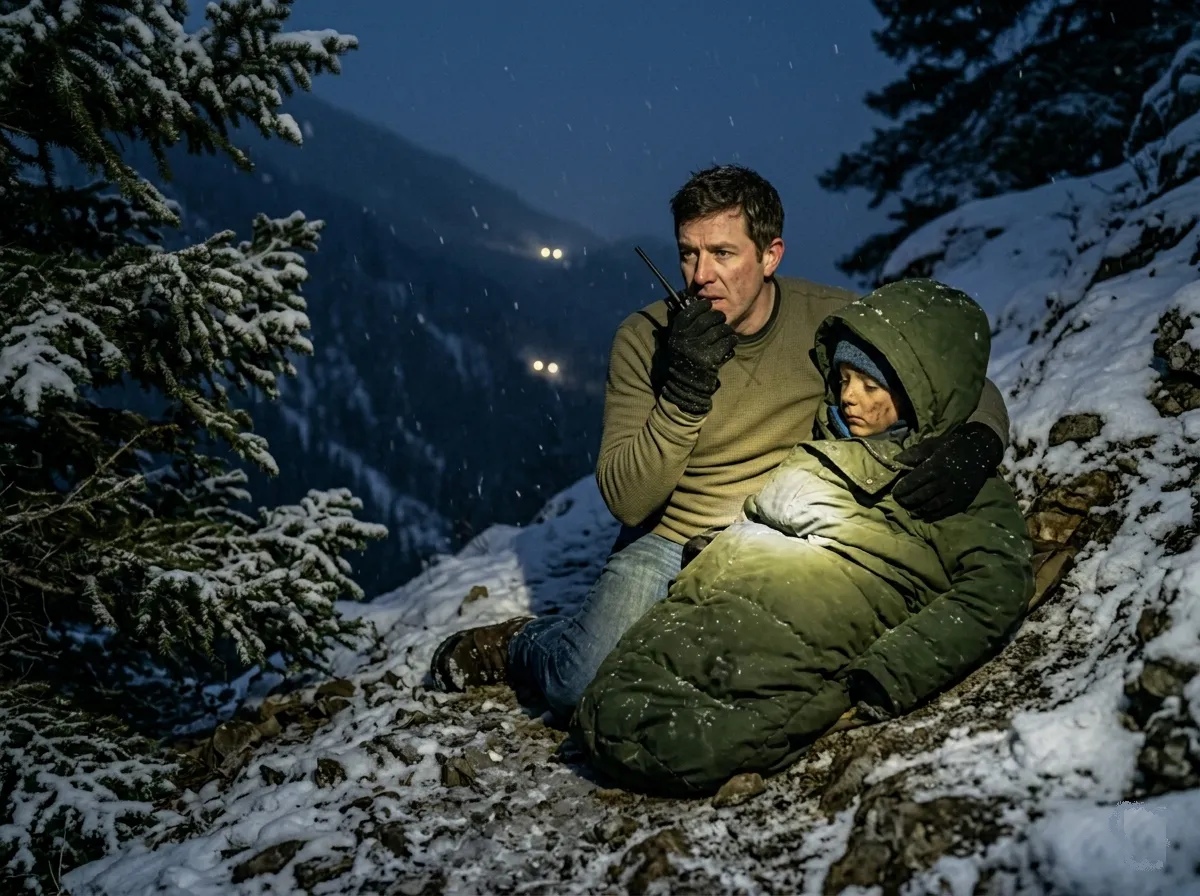
“I saw a bunny, I was trying to follow it, and got lost. But I found this hidey hole and was making a fire, Dad,” Michael said, his voice small and raspy from the cold. “Like you showed me in the book. But the sparks wouldn’t stay.” The relief that flooded through Mathew was so violent it almost knocked him off his feet. He lunged forward, grabbing the boy and pulling him into a crushing embrace.
Michael was ice-cold to the touch, but he was alert. Mathew quickly stripped off his own heavy outer parka and wrapped it around the boy, creating a warm cocoon. He keyed his radio, his hands shaking so much he could barely press the button. “I have him! I have Mike! He’s alive! We’re at the top of the Black Slate path!”
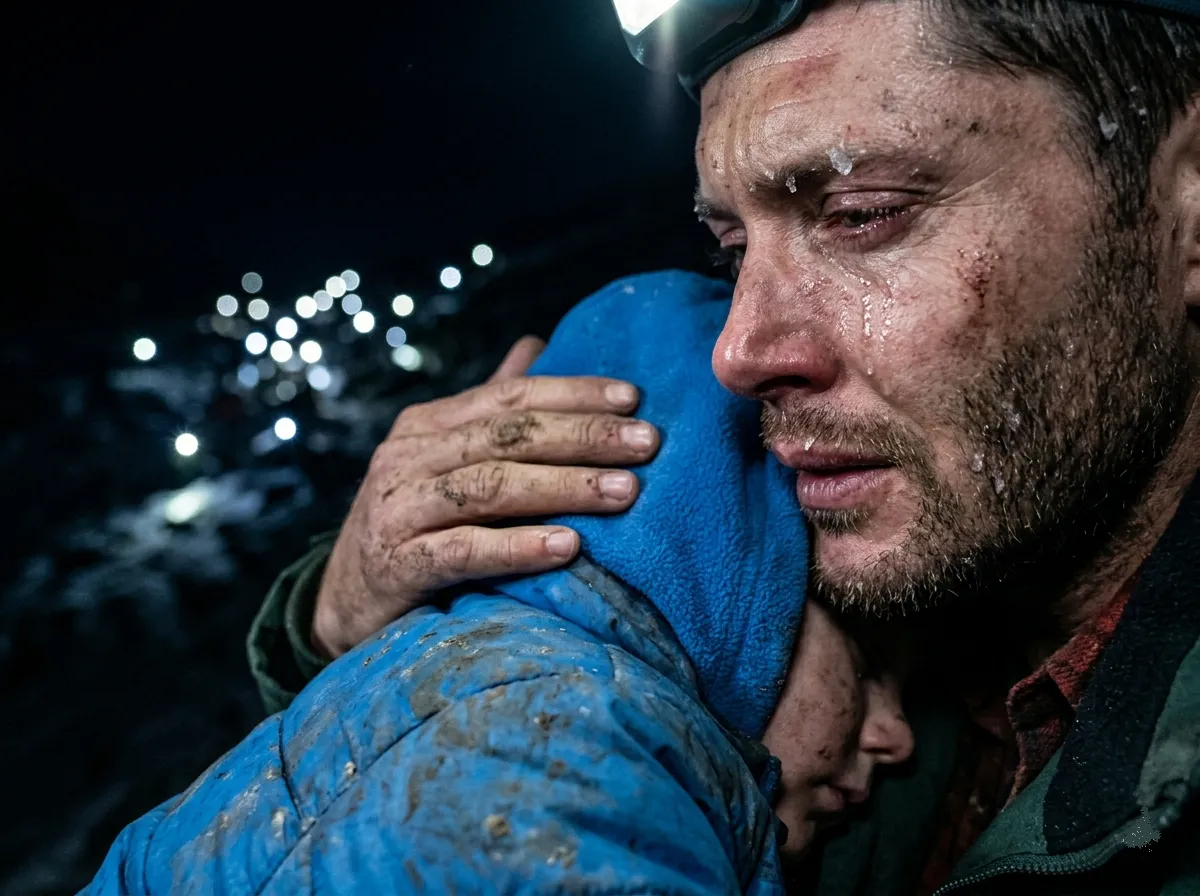
The radio erupted in a chorus of cheers and shouts that Mathew could hear even without the device. Below them on the mountain, dozens of flashlights began to dance and wave in celebration. Mathew sat there in the snow for a long minute, holding his son, feeling the boy’s small heart beating against his chest. It was the most beautiful sound he had ever heard.
“Are you mad at me?” Michael asked, his head resting on Mathew’s shoulder. Mathew choked out a laugh, half-sob. “No, Mike. I’m not mad. But next time, tell me when you feel like going outside or following an animal, okay?” He stood up, hoisting the boy into his arms. He felt a sudden, incredible strength; the fatigue of the last six hours had vanished.
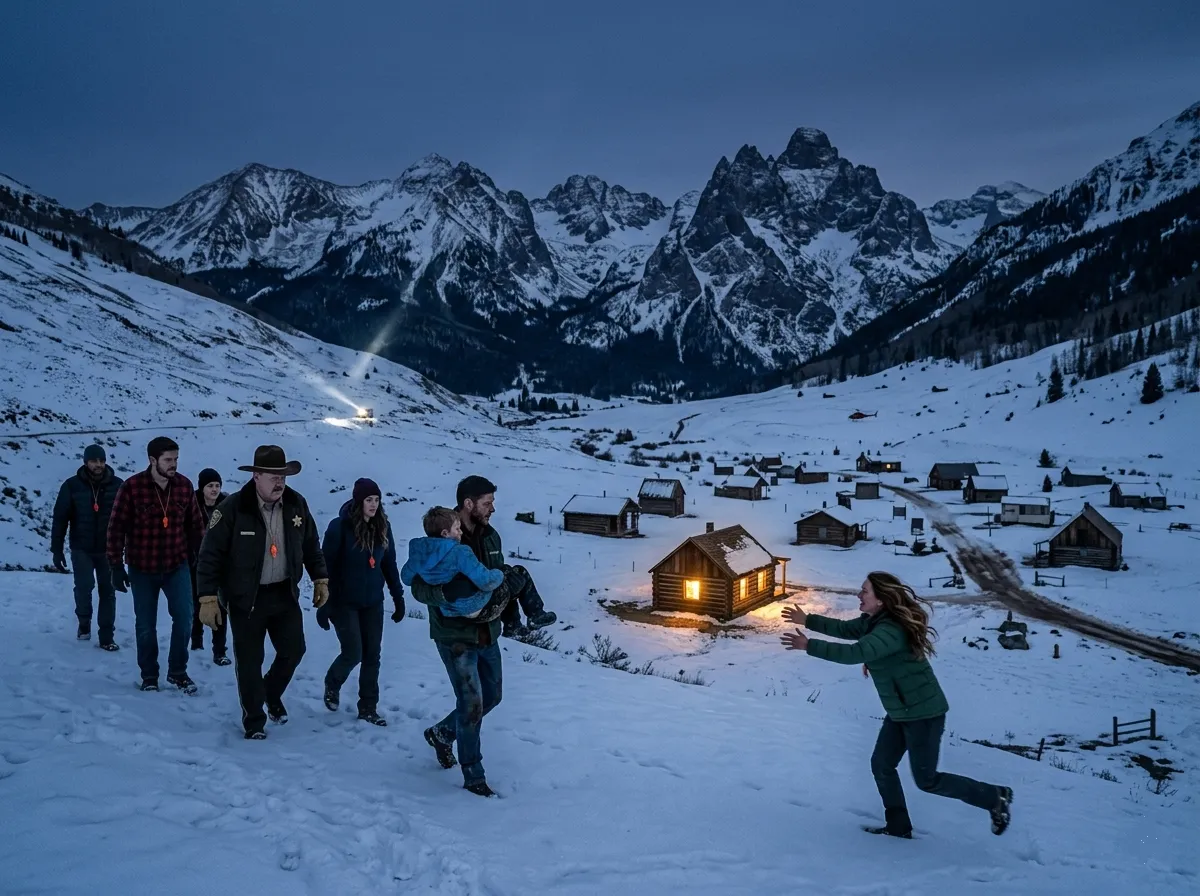
The journey down the mountain was very different from the climb up. The search committee met them halfway, and two neighbors took turns helping Mathew carry the boy to ensure they got down safely. As they broke through the treeline, Mathew saw the lights of his home. It looked like a beacon in the dark, warm and welcoming.
Angela was running across the yard before the truck had even come to a full stop. Mathew stepped out and handed Michael directly into her arms. The neighbors stood back, giving the family a moment of privacy, though many of them were wiping tears from their own eyes. The terror that had gripped the mountain was finally breaking.
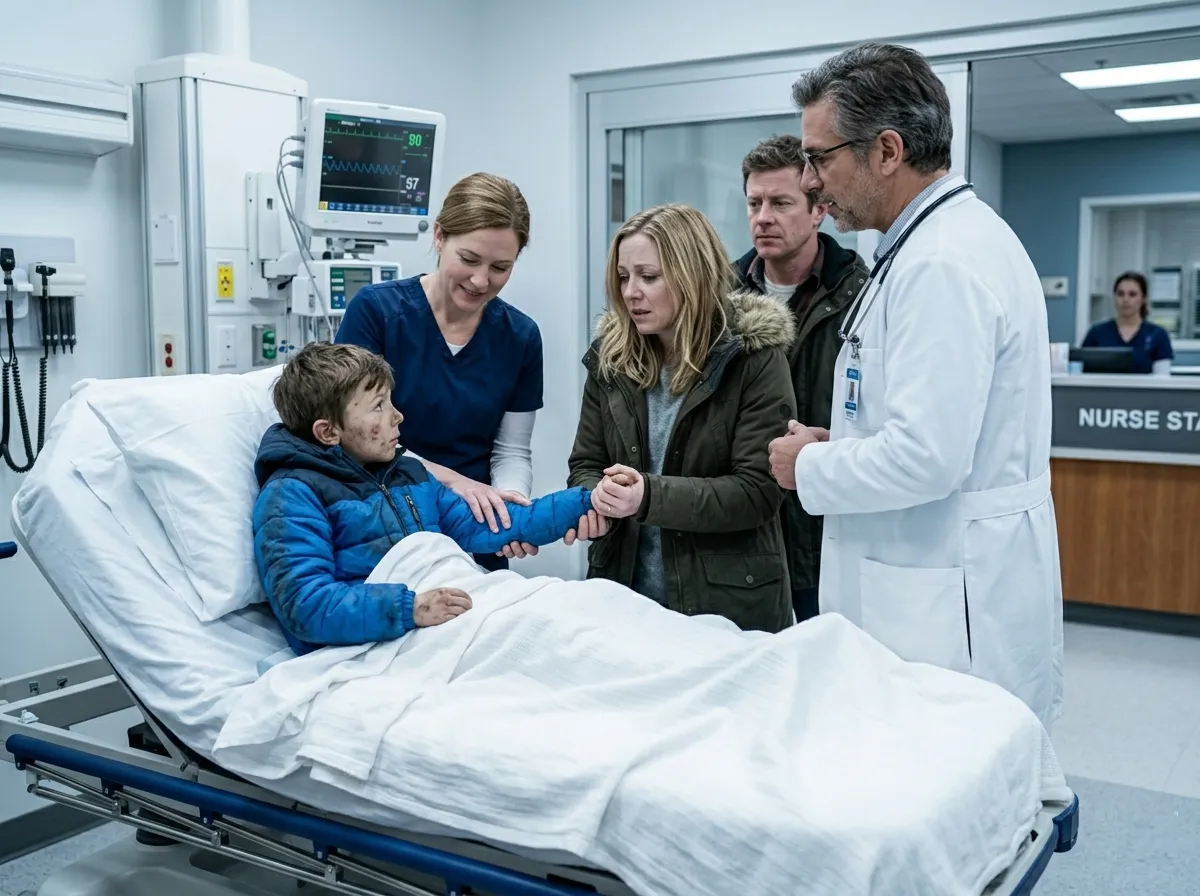
The parents decided to take Mike to the hospital, just to be on the safe side. Michael looked impossibly small beneath the bright white lights. A nurse checked his temperature, his pulse, and the pale tips of his toes while Angela held his hand as if letting go might make the night repeat itself. Mathew stood nearby, unable to stop watching his son’s chest rise and fall. The doctor spoke gently, explaining that Michael was cold, exhausted, and a bit shaken, but somehow had no serious injuries.
A few hours later, Michael was wrapped in a warm blanket with a cup of hot chocolate balanced carefully in both hands. His cheeks had color again, and he was already telling the nurse how he had tried to make fire with two stones. Mathew and Angela exchanged a look, half laughter and half tears. The mountain had nearly taken their son from them, but now he was sitting between them, sleepy and safe, asking when they could finally go home.
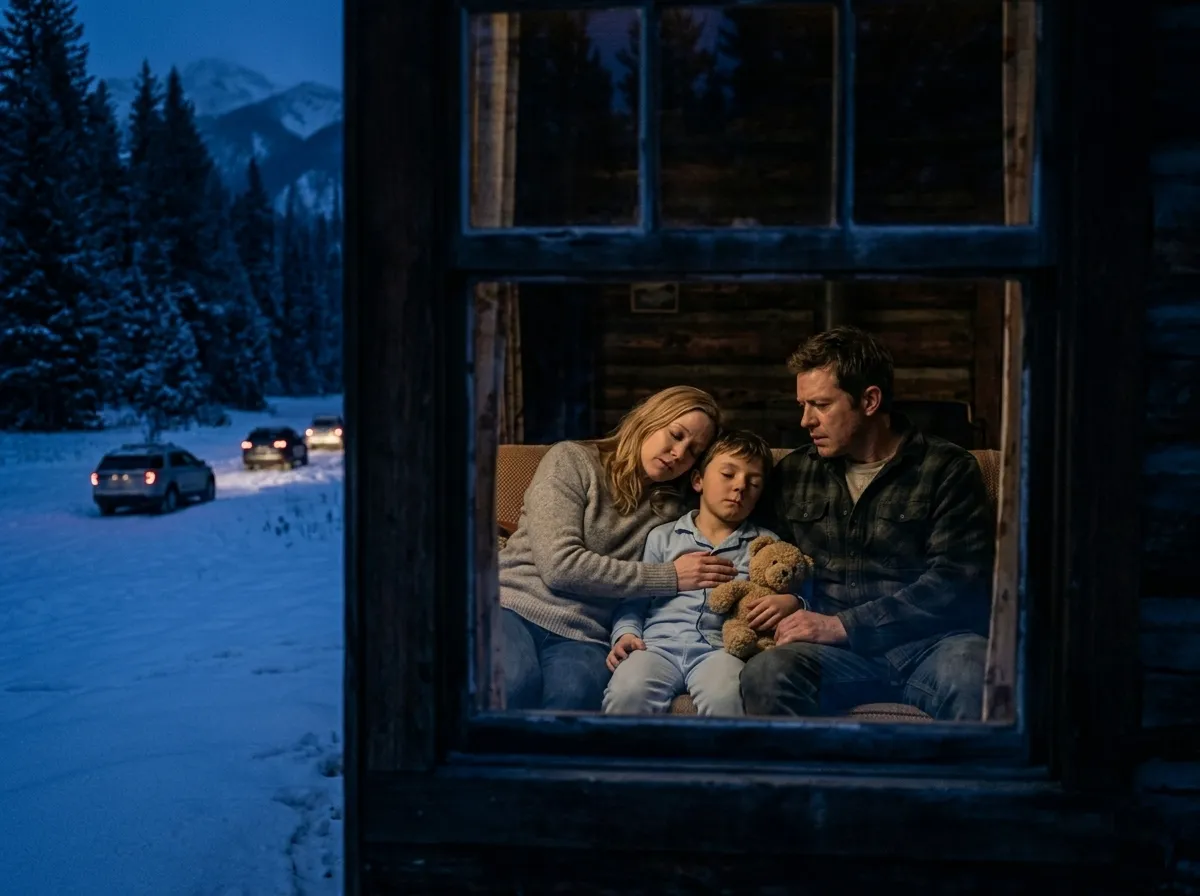
When they were finally home, inside the warm kitchen, the Lego bricks were still on the table. As the neighbors, who had stayed over to get a glimpse of the “lost boy,” finally began to head home and the last of the cars pulled out from the driveway, Mathew stood by the window, looking out at the mountain. It looked different now—less like a monster and more like a giant that had simply been holding his son for a while. He felt an incredible sense of gratitude for the people who had stood by them in the dark.
He walked into the living room, where Michael had finally fallen asleep on the sofa, sandwiched between Angela and his stuffed bear. The boy looked so small and peaceful, his breathing deep and steady. The “brave explorer” was exhausted, but he was home!