
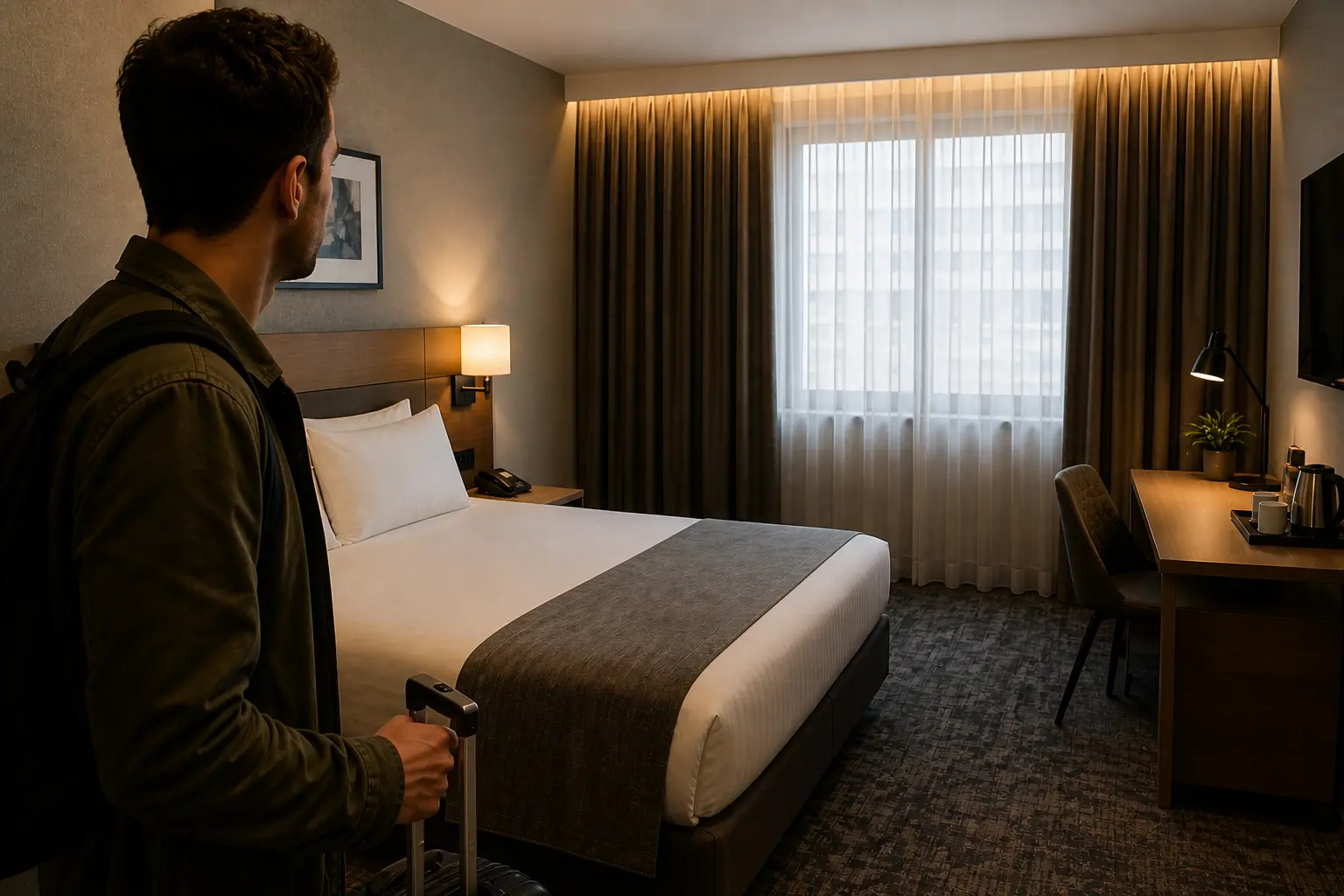
Every hotel stay begins with a silent ritual of trust. You turn the key, the heavy door thuds shut behind you, and you take that first, sweeping breath of “clean” air. For most of us, the inspection is purely surface-level. We check the crispness of the linens, the shine of the bathroom fixtures, and the view from the window. If these visual anchors meet our standards, we exhale. We tell ourselves we are safe, that the room is vacant, and that the previous occupant has been completely erased.
But hospitality experts and seasoned travelers know that there is a fundamental flaw in how we “clear” a room. We are hardwired to look at the objects we intend to use—the bed, the desk, the shower—while completely ignoring the areas that serve no immediate purpose. There is one specific corner of every hotel room that acts as a permanent blind spot. It is a space large enough to hide a multitude of problems, yet it remains untouched by 90% of guests.
Most people will spend their entire stay within three feet of it without ever realizing they aren’t alone in the way they think they are.

The reason frequent travelers have started obsessing over this one overlooked area isn’t born from a love of detective work; it’s born from experience. We spoke to one traveler whose perspective shifted forever after a seemingly routine stay in a high-end boutique hotel. Like anyone else, they checked the bed for pests and the door for its deadbolt. Everything felt “normal.” But as the night went on, the room began to feel smaller. There was no noise, no movement, just a persistent, nagging sense that the room’s geometry didn’t quite add up.
It’s a sensation many have felt but few can name—the “weight” of an unchecked space. We often forget that hotel rooms are high-turnover environments where the staff is frequently pushed to their absolute limits. In the rush to turn a room over in twenty minutes, certain zones are treated as “invisible” by the cleaning crew. If it isn’t in the direct line of sight, it doesn’t exist. But what happens when the thing left behind isn’t just a stray piece of lint?
What happens when the oversight involves the very boundary between you and the outside world?
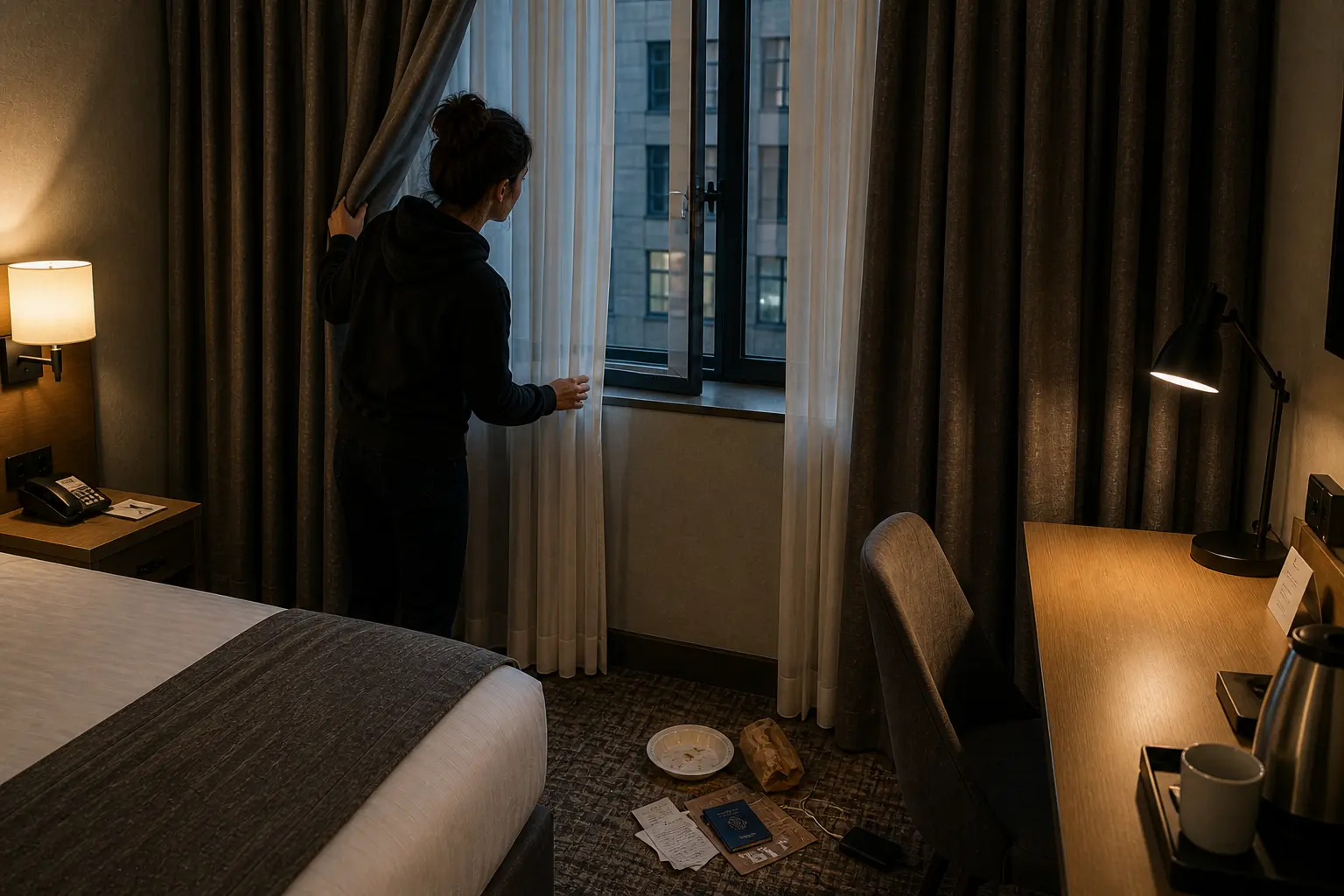
The “blind spot” in question is the heavy, floor-to-ceiling expanse of the hotel curtains. Because these drapes are designed to be thick and stationary, we treat them as a permanent wall. But the moment you pull them back, you realize they are a partition hiding a significant, unmonitored zone. This is where the “check” becomes vital for a reason most travelers overlook: structural safety. In many hotels, housekeeping will crack a window to vent cleaning fumes.
If they fail to re-latch it, that heavy fabric hides a literal drop to the street. For a small child playing hide-and-seek, the space behind the curtain is an instinctive magnet—and an unlatched window there is a catastrophe waiting to happen. Beyond the physical danger, this area serves as the ultimate “litmus test” for the room’s hygiene. Because it is rarely scrutinized by the staff’s daily cleaning rotation, the windowsill and the floorboards behind the fabric become a collection point for deep-seated neglect.
You aren’t looking for a guest’s lost phone; you are looking for the tell-tale signs of a rushed “turn-down”—dust bunnies, dead insects, or discarded trash from weeks ago. If these remnants are lingering, it is your first and most reliable warning: this room was never truly deep-cleaned.
But here’s the most important thing to keep in mind:
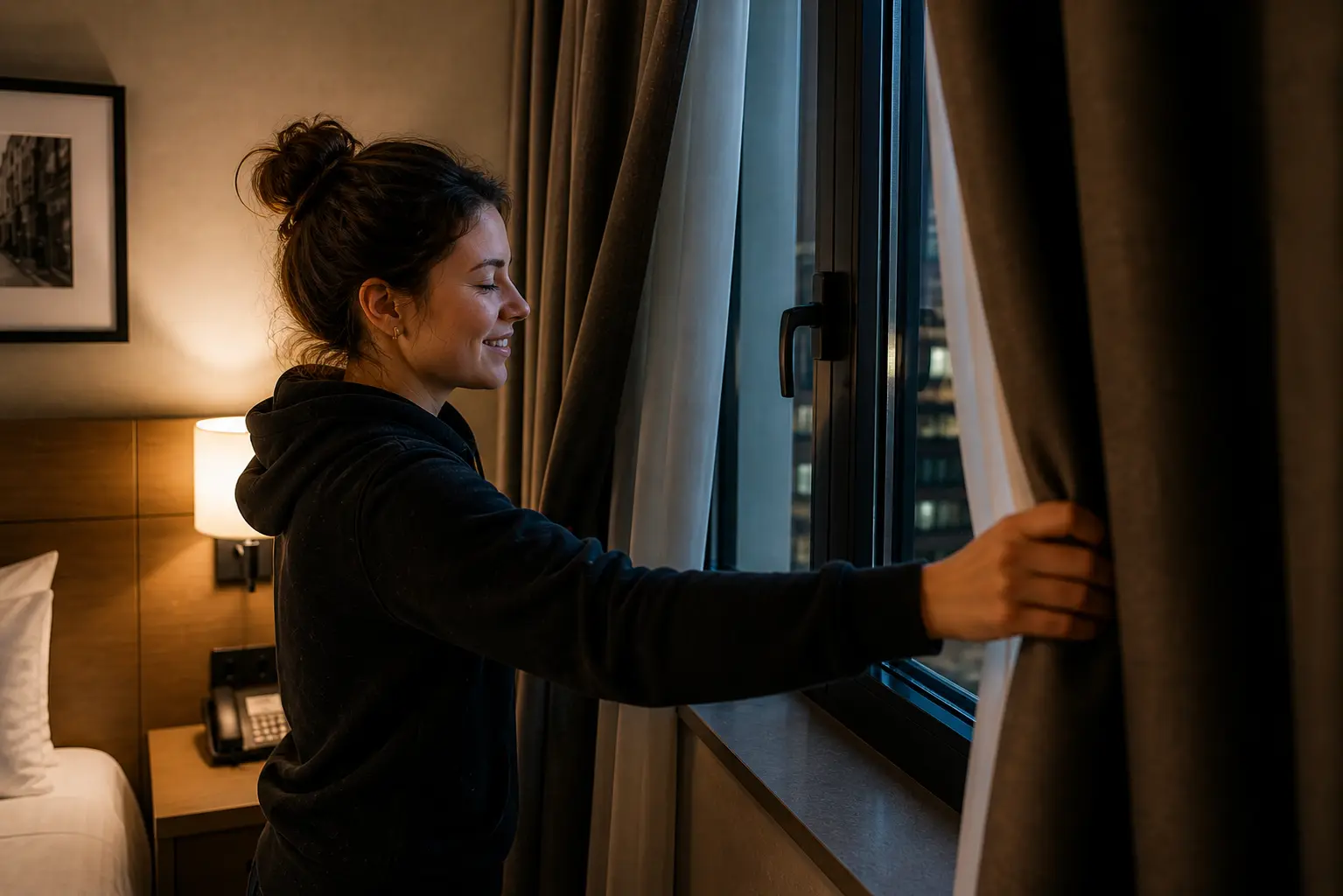
Checking the curtains is ultimately about removing uncertainty. It takes exactly five seconds, but it changes the entire energy of your stay. When you perform “the pull,” you are doing three things: you are verifying the window locks, you are checking the ledge for mold or pests that thrive in dark, damp corners, and you are ensuring your own privacy. A broken curtain track or a magnetic seal that doesn’t meet can leave a sliver of light—and a line of sight—wide open to the world outside.
The ritual is simple. Before you unpack a single suitcase, walk to the window. Pull the fabric entirely away from the wall. Scan the floor, the ledge, and the window latch. By doing this, you aren’t being paranoid—you are being thorough. You are confirming that the space you paid for is truly, exclusively yours. Once you’ve made it a habit, you’ll find that you can finally sleep soundly, knowing that there isn’t a single inch of the room that hasn’t been accounted for.
Don’t let your “home away from home” have a single secret.