
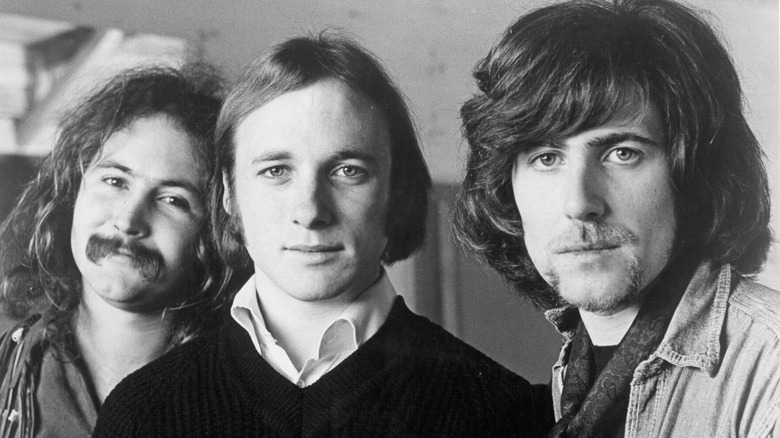
December 1968 marked a seismic shift in the landscape of rock music. On a night soaked in bitterness and regret, Graham Nash, then a prominent member of The Hollies, made a decision that would change the course of his life, and music history, forever. After his bandmates ridiculed his heartfelt song for being too soft, Nash walked away, leaving behind not just a band, but the familiar comfort of his musical home. Little did he know, this act of defiance would propel him into the heart of one of the greatest supergroups in rock history.
The Hollies were a driving force in the British Invasion, known for their infectious melodies and harmonies. However, Nash’s artistic vision was evolving. He began to crave a creative outlet that could fully embrace his poetic tendencies—a departure from the party tunes and catchy hooks that The Hollies were known for. The mocking laughter of his peers echoed in his mind as he fled to California, a place where the burgeoning counterculture promised freedom and creative liberation.
Arriving in Los Angeles, Nash found himself among legendary figures who were also challenging musical conventions. It was in this vibrant scene that he crossed paths with Stephen Stills and David Crosby. Their initial jam sessions would soon blossom into the powerhouse trio known for their haunting harmonies and evocative lyrics. That chance meeting marked the genesis of Crosby, Stills & Nash—a group that would capture the essence of the tumultuous 1960s and resonate with generations to follow.
The formation of CSN was not just a mere collaboration; it was a confluence of talent that embodied the social upheavals of the time. Their self-titled debut album, released in 1969, showcased the mesmerizing blend of Graham Nash's emotional depth, Stills’ eclectic musicianship, and Crosby’s unique style. The single "Suite: Judy Blue Eyes" remains a defining moment in rock music, enchanting listeners with its intricate harmonies and poignant storytelling. The expression of personal experiences and emotional authenticity that Nash longed for found its place in this new collective.
Graham Nash’s journey reminds us of the delicate balance between artistic integrity and commercial expectation, a conflict still prevalent in today’s music industry. His decision to step away from the superficial camaraderie of The Hollies in favor of a more authentic artistic expression speaks to a universal truth: sometimes, it takes courage to walk away from what is familiar to discover where you truly belong.
Beyond the music, Nash’s story resonates because it captures the struggle of countless artists who face ridicule and doubt. The moment he left The Hollies was not just a personal crisis; it was a transformative pivot point that illustrates the potential of resilience and reinvention.
As we delve into the sonic tapestry of late 60s rock, Graham Nash stands as a testament to the invincible spirit of artistic creation. His leap into the unknown not only birthed one of rock’s most celebrated supergroups but also paved the way for self-expression in music—an enduring legacy that continues to inspire artists today.
In reflecting upon this pivotal moment in history, we are reminded that what often appears as an ending can lead to extraordinary beginnings. Graham Nash's story is not just about leaving a band; it's about the creative courage to pursue authenticity and the remarkable beauty of forging new paths in the ever-evolving world of music.