
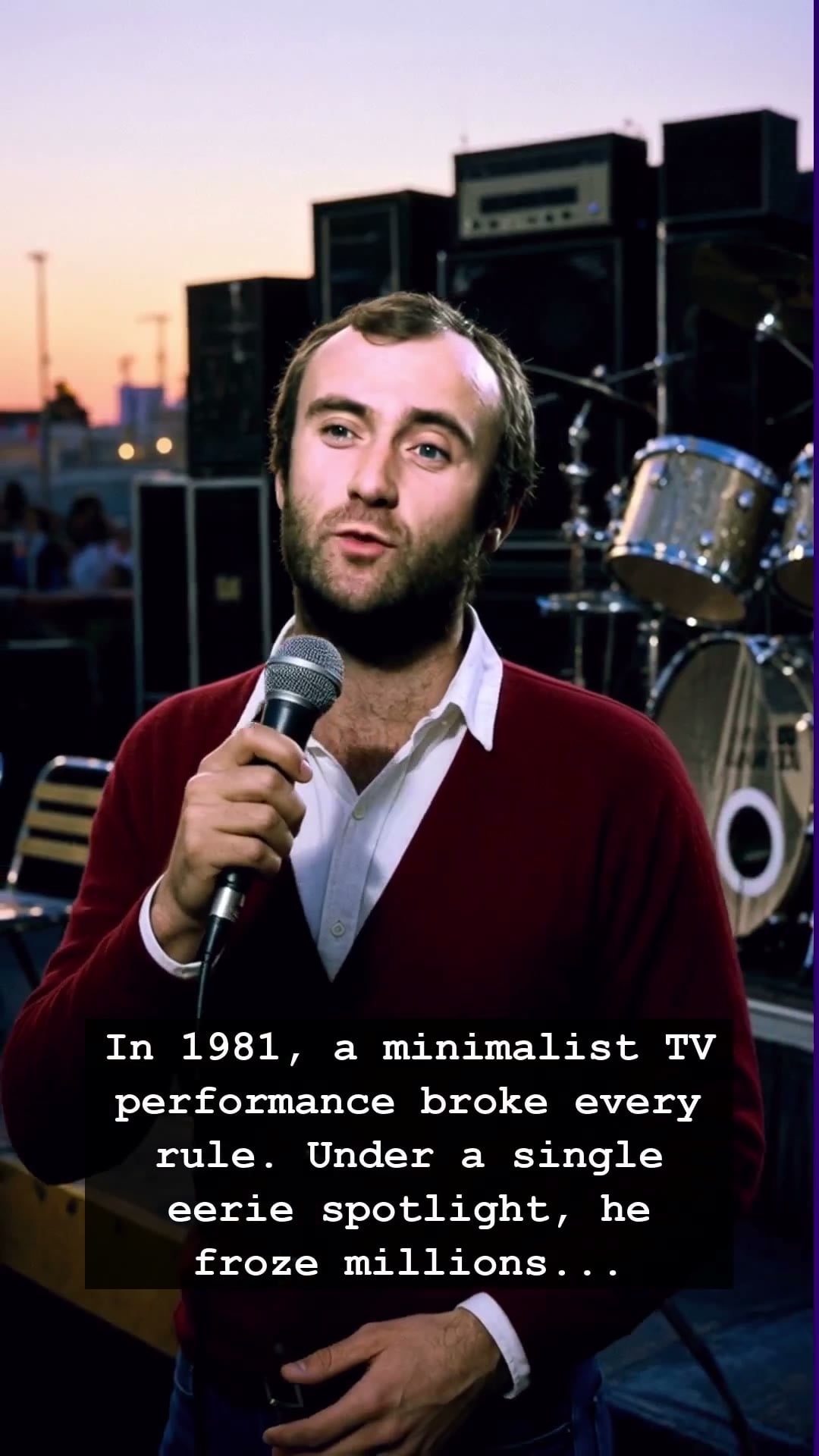
In 1981, television was a loud, chaotic landscape of neon lights and high-energy music videos that were just beginning to redefine pop culture through the rise of MTV. Viewers were accustomed to extravagant costumes, synchronized choreography, and overproduced arrangements. But then, Phil Collins walked onto a stage, stood under a single, haunting spotlight, and broke every unspoken rule of the era. The result was a minimalist masterpiece that didn’t just capture attention; it froze millions of viewers in an absolute, breathless silence that still echoes through the halls of music history today.
At the center of this seismic shift was In the Air Tonight, a song born from the deep, personal ashes of a broken marriage. While the early eighties were defined by disco’s remnants and the birth of synth-pop, Phil Collins chose to strip away the artifice. He channeled his private agony into a sparse, atmospheric arrangement that relied on silence as much as sound. As he stood there, his face illuminated by that eerie, solitary beam of light, the audience was forced to confront something raw, vulnerable, and profoundly human in a world that was becoming increasingly synthetic.
This performance was more than just a musical showcase; it was a watershed moment for the transition from the seventies rock sensibilities into the digital soundscapes of the future. The song’s iconic drum fill remains one of the most recognizable moments in rock history, but the brilliance of the 1981 broadcast was in the anticipation. Phil Collins understood the power of tension. He let the keyboard drones build a sense of foreboding, holding the audience captive until the percussion finally exploded. It was a masterclass in emotional storytelling that made a stadium of millions feel like a private confession.
Behind the scenes, Phil Collins was navigating the immense pressure of fame and the isolating nature of touring life. The song served as his personal outlet, a way to translate the dark, suffocating weight of betrayal into a melody that reached across the airwaves. By rejecting the flamboyant norms of the day, he proved that music didn’t need pyrotechnics or expensive stage sets to be legendary. He relied entirely on the haunting sincerity of his voice and that relentless, dark rhythm, creating a sound that felt like a secret shared between the artist and the listener.
Decades later, the legend of that night remains untarnished. It stands as a reminder of an era when artists could still command a room through sheer presence rather than digital filters or social media spectacle. For those who sat by their television sets that night, the memory of that spotlight and the cold, driving beat of the track is etched into their cultural consciousness. Phil Collins didn’t just perform a hit song; he left a permanent scar on the face of popular music, reminding us all that the most powerful sounds are often the ones that emerge from the darkest silences. Do you still remember where you were when the drums finally kicked in?